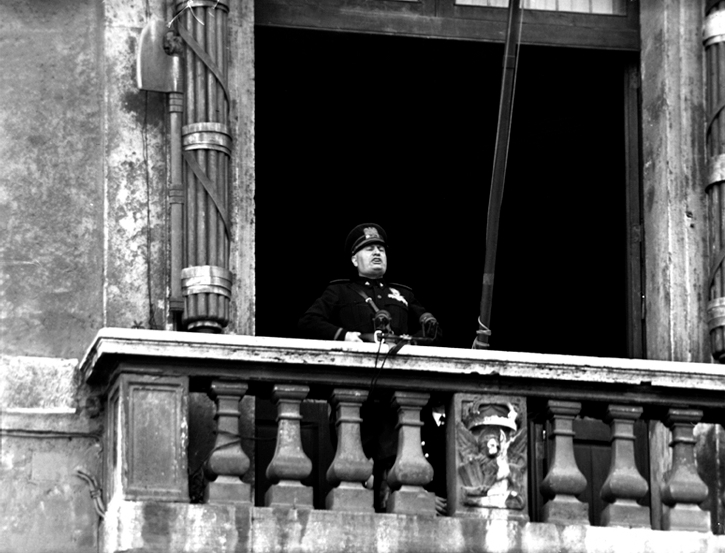
Italy Declares War against France and the United Kingdom
Germany

'%3e%3cpath fill='%23012169' d='M0 0v30h60V0z'/%3e%3cpath stroke='%23fff' stroke-width='6' d='m0 0 60 30m0-30L0 30'/%3e%3cpath stroke='%23C8102E' stroke-width='4' d='m0 0 60 30m0-30L0 30' clip-path='url(%23b)'/%3e%3cpath stroke='%23fff' stroke-width='10' d='M30 0v30M0 15h60'/%3e%3cpath stroke='%23C8102E' stroke-width='6' d='M30 0v30M0 15h60'/%3e%3c/g%3e%3c/svg%3e)

World War
3 min read
Updated By: History Editorial Network (HEN)
Published:
Updated:
Italy's declaration of war against France and the United Kingdom marked a pivotal escalation in the conflict during this period. This action was part of Italy's broader strategy to expand its influence and territory in Europe, aligning itself with Germany. The Italian military aimed to capitalize on the ongoing hostilities, seeking to assert its power in the Mediterranean and beyond. The declaration came after a series of military engagements in which Italy sought to demonstrate its commitment to the Axis powers. The impact of this decision was immediate, as it drew Italy deeper into the conflict and set the stage for subsequent military operations against Allied forces.
Norway's surrender followed two months of intense combat, making it the longest resistance against German invasion among the nations affected. The Norwegian government, led by King Haakon, had evacuated to Britain shortly before the capitulation, indicating the dire situation faced by Norwegian forces. The surrender not only marked a significant territorial gain for Germany but also had strategic implications for the Allies, as it allowed German forces to secure vital shipping routes in the North Atlantic. The fall of Norway was a blow to Allied morale and highlighted the challenges they faced in countering Axis advances in Europe. The evacuation of the Norwegian government underscored the urgency of the situation and the need for a coordinated response from the Allies to prevent further losses.
#mooflife
#MomentOfLife
#ItalyDeclaresWar
#NorwaySurrenders
#WorldWarIi
#AxisPowers
#AlliedForces
Primary Reference
Italian invasion of France

Explore the Life Moments of
 AI Twin