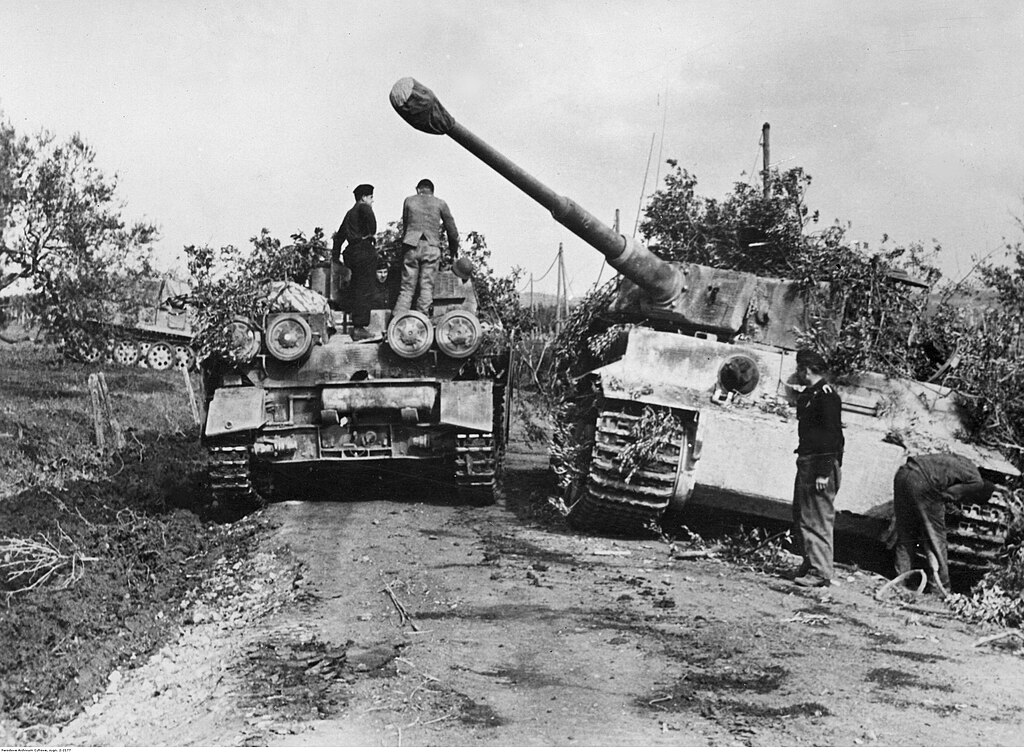
Germans launch counter-attack at Anzio
Germany

'%3e%3cpath fill='%23012169' d='M0 0v30h60V0z'/%3e%3cpath stroke='%23fff' stroke-width='6' d='m0 0 60 30m0-30L0 30'/%3e%3cpath stroke='%23C8102E' stroke-width='4' d='m0 0 60 30m0-30L0 30' clip-path='url(%23b)'/%3e%3cpath stroke='%23fff' stroke-width='10' d='M30 0v30M0 15h60'/%3e%3cpath stroke='%23C8102E' stroke-width='6' d='M30 0v30M0 15h60'/%3e%3c/g%3e%3c/svg%3e)


Military History
World War II
Battle Strategies
4 min read
Updated By: History Editorial Network (HEN)
Published:
Updated:
The counter-attack at Anzio was a pivotal moment during World War II, specifically in the Italian Campaign. Following the Allied landings at Anzio, which aimed to outflank German defenses and facilitate a push towards Rome, the situation became increasingly precarious for the Allied forces. The Germans, recognizing the strategic importance of the beachhead established by American troops, initiated a significant counter-offensive. This operation was characterized by a series of coordinated assaults aimed at reclaiming lost territory and disrupting Allied supply lines. The German forces, leveraging their experience and tactical proficiency, sought to encircle the beachhead and cut off reinforcements, thereby threatening the viability of the Allied position in the region. The counter-attack not only aimed to regain control of the area but also to bolster German morale, which had been waning due to previous setbacks in the campaign.
The impact of the German counter-attack at Anzio was profound, as it led to intense fighting and significant casualties on both sides. The Allies faced the challenge of holding their ground against a well-organized and determined enemy. The counter-offensive forced the Allies to adapt their strategies, leading to a protracted battle that would test their resolve and resources. The struggle at Anzio became emblematic of the broader challenges faced by Allied forces in Italy, highlighting the difficulties of conducting operations in a complex and hostile environment. Ultimately, the counter-attack underscored the importance of logistics, intelligence, and coordination in modern warfare, as both sides vied for control of a strategically vital area that would influence the course of the campaign in Italy.
#mooflife
#MomentOfLife
#Anzio
#WorldWarIi
#GermanCounter-attack
#ItalianCampaign
#AlliedForces
Primary Reference
Battle of Anzio

Explore the Life Moments of
 AI Twin