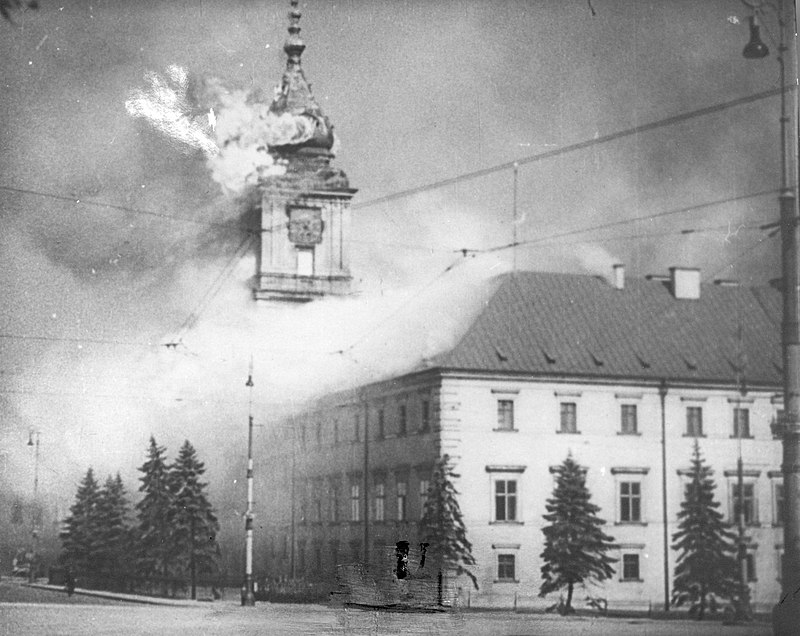
German Army Encircles Warsaw
Germany
Military
World War II
4 min read
Updated By: History Editorial Network (HEN)
Published:
Updated:
The encirclement of Warsaw by the German Army marked a critical phase in the early stages of the conflict. The German forces, having crossed the Polish border in large numbers from both the north and south, executed a coordinated military strategy that involved not only their own troops but also Slovak units. This operation was characterized by rapid advances and the use of overwhelming firepower, including aerial bombardments, which had devastating effects on the city and its defenses. The encirclement was completed as German troops effectively cut off all routes of escape and supply to the Polish capital, leading to a significant strategic advantage for the German military. The operation was part of a broader campaign that aimed to swiftly conquer Poland, demonstrating the effectiveness of Blitzkrieg tactics that combined speed, surprise, and concentrated force.
The impact of the encirclement was profound, as it not only led to the eventual surrender of Warsaw but also set the stage for the rapid fall of Poland. The German Army's tactics during this period showcased their ability to mobilize and coordinate large-scale operations, which would influence military strategies in subsequent conflicts. The annexation of the Free City of Danzig further solidified German control in the region, contributing to the broader objectives of territorial expansion. The encirclement of Warsaw is often cited as a pivotal moment in the early days of World War II, illustrating the effectiveness of German military strategy and the challenges faced by Polish forces in defending their capital against a technologically superior adversary.
#mooflife
#MomentOfLife
#GermanArmy
#Warsaw
#WorldWarIi
#Poland
#Blitzkrieg
Primary Reference
Siege of Warsaw (1939)

Explore the Life Moments of
 AI Twin