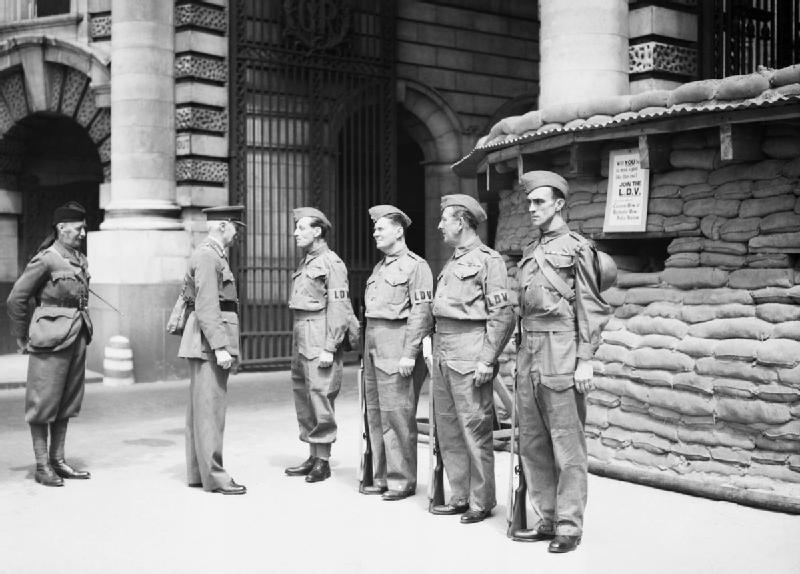
Formation of the Home Guard
Germany
'%3e%3cpath fill='%23012169' d='M0 0v30h60V0z'/%3e%3cpath stroke='%23fff' stroke-width='6' d='m0 0 60 30m0-30L0 30'/%3e%3cpath stroke='%23C8102E' stroke-width='4' d='m0 0 60 30m0-30L0 30' clip-path='url(%23b)'/%3e%3cpath stroke='%23fff' stroke-width='10' d='M30 0v30M0 15h60'/%3e%3cpath stroke='%23C8102E' stroke-width='6' d='M30 0v30M0 15h60'/%3e%3c/g%3e%3c/svg%3e)
World War II
Military Strategy
4 min read
Updated By: History Editorial Network (HEN)
Published:
Updated:
The formation of a wartime coalition marked a pivotal shift in the political landscape during a time of crisis. The announcement of the Local Defence Volunteers, commonly known as the Home Guard, was made by the new Secretary of State for War, Anthony Eden. This organization primarily consisted of elderly and retired individuals who were mobilized to support the defense of the nation amidst the escalating threat of invasion. Concurrently, Prime Minister Winston Churchill sought assistance from President Roosevelt and Canada, emphasizing the urgency of international support during these challenging times. The coalition government, which included members from Labour, Liberal, and Conservative parties, was a strategic response to the growing pressures of war, aiming to unify the nation under a common cause against the Axis powers.
The military situation in Europe was dire, with the Netherlands facing significant challenges. The Dutch forces experienced a defeat at the Battle of the Grebbeberg against the Germans, which was part of a broader campaign that included the Rotterdam Blitz. This aerial assault resulted in substantial civilian casualties and widespread destruction, ultimately leading to the Dutch decision to surrender, except for the province of Zeeland. The combination of military setbacks and the formation of a coalition government illustrated the urgent need for a coordinated defense strategy and the mobilization of all available resources to confront the enemy. The establishment of the Home Guard and the coalition government represented a critical response to the wartime challenges, aiming to bolster national morale and defense capabilities.
#mooflife
#MomentOfLife
#WartimeCoalition
#LocalDefenceVolunteers
#HomeGuard
#WorldWarIi
#BritishGovernment
Primary Reference
Home Guard (United Kingdom)

Explore the Life Moments of
 AI Twin