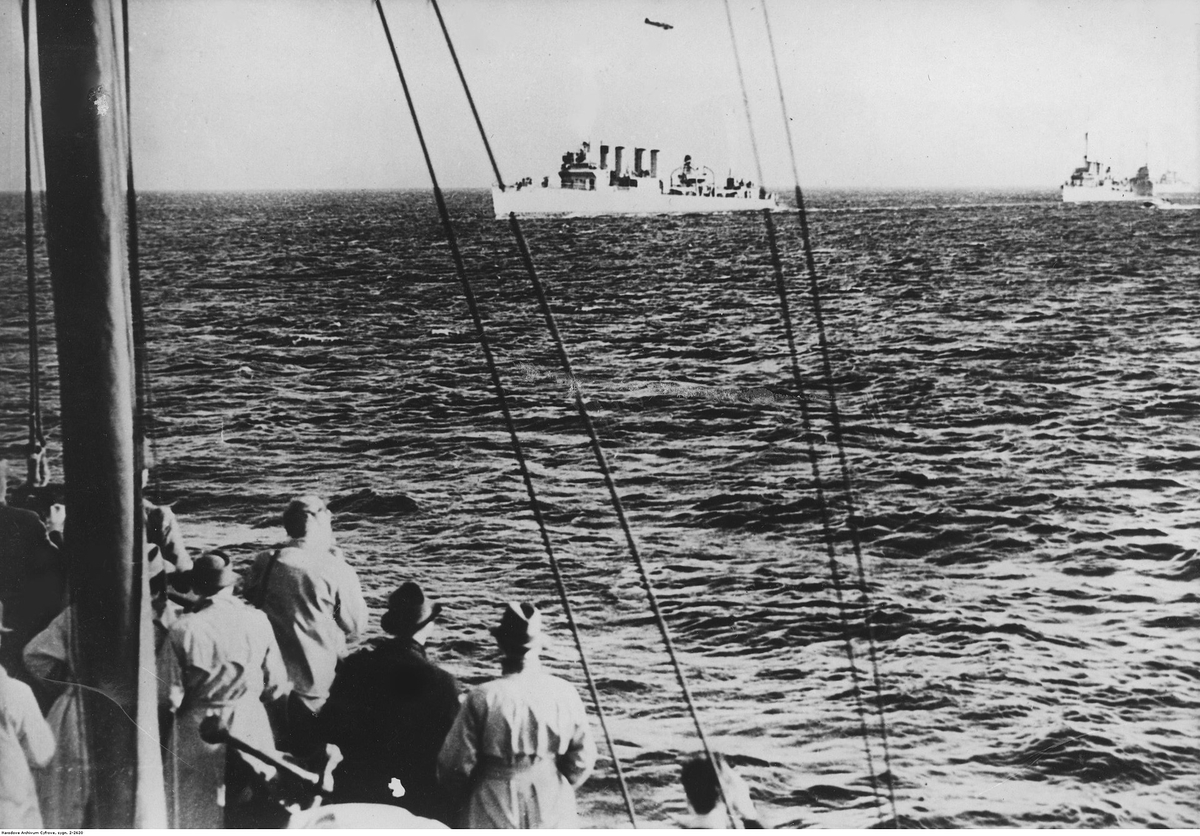
Destroyers for Bases Agreement completed
Germany
'%3e%3cpath fill='%23012169' d='M0 0v30h60V0z'/%3e%3cpath stroke='%23fff' stroke-width='6' d='m0 0 60 30m0-30L0 30'/%3e%3cpath stroke='%23C8102E' stroke-width='4' d='m0 0 60 30m0-30L0 30' clip-path='url(%23b)'/%3e%3cpath stroke='%23fff' stroke-width='10' d='M30 0v30M0 15h60'/%3e%3cpath stroke='%23C8102E' stroke-width='6' d='M30 0v30M0 15h60'/%3e%3c/g%3e%3c/svg%3e)

International Relations
Military Agreements
Naval History
4 min read
Updated By: History Editorial Network (HEN)
Published:
Updated:
The Destroyers for Bases Agreement was a pivotal arrangement between the United Kingdom and the United States during a time of global conflict. Under this agreement, Britain received 50 naval destroyers from the United States, which were crucial for enhancing its naval capabilities. In return, the United States secured land grants in several British territories, allowing for the establishment of U.S. naval and air bases. These bases were located in strategic locations such as the Bahamas, Antigua, St. Lucia, Trinidad, Jamaica, and British Guiana, and were provided on ninety-nine-year rent-free leases. This exchange was significant as it not only bolstered Britain's defense during a critical period but also marked a shift in U.S. foreign policy towards greater involvement in global affairs, particularly in the Atlantic region.
The impact of the Destroyers for Bases Agreement extended beyond immediate military advantages. It represented a deepening of Anglo-American relations and set a precedent for future military cooperation. The bases established under this agreement played a vital role in the U.S. military strategy during World War II, facilitating operations in the Caribbean and the Atlantic. Furthermore, the agreement highlighted the strategic importance of the Caribbean as a defense perimeter for the United States. The destroyers provided to Britain were instrumental in maintaining naval superiority against Axis powers, thereby contributing to the overall Allied war effort. This agreement is often viewed as a key moment in the evolution of U.S. military presence in the Western Hemisphere and its commitment to supporting allies in times of conflict.
#mooflife
#MomentOfLife
#DestroyersForBasesAgreement
#UsUkRelations
#WorldWarIi
#NavalBases
#MilitaryCooperation
Primary Reference
Destroyers-for-bases deal

Explore the Life Moments of
 AI Twin