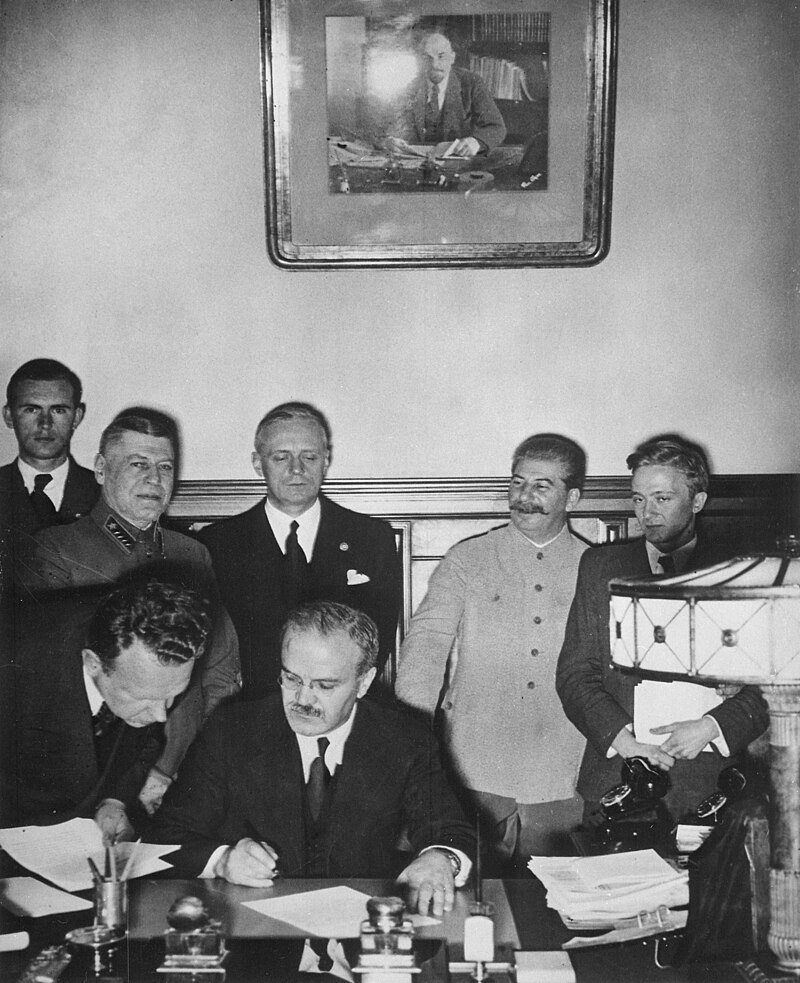
German–Soviet Frontier Treaty Signed
Germany
Politics
4 min read
Updated By: History Editorial Network (HEN)
Published:
Updated:
The German-Soviet Frontier Treaty was a pivotal agreement that formalized the division of Eastern Europe between Nazi Germany and the Soviet Union. This treaty was a direct extension of the Molotov-Ribbentrop Pact, which had previously outlined the spheres of influence for both powers. The secret protocol of the treaty detailed the partition of Poland, which had been invaded by both nations shortly after the pact was signed. The treaty not only confirmed the division of Poland but also included Lithuania, placing it firmly within the Soviet sphere of influence. This agreement was crucial in shaping the geopolitical landscape of Europe at the time, as it allowed both Germany and the Soviet Union to expand their territories without immediate conflict with each other.
The impact of the German-Soviet Frontier Treaty was profound, as it facilitated the onset of World War II by enabling the coordinated invasion and subsequent division of Poland. The treaty effectively eliminated Poland as an independent state and set a precedent for further territorial expansions by both regimes. The collaboration between Germany and the Soviet Union, despite their ideological differences, demonstrated a strategic alliance that would have lasting consequences for Europe. The partitioning of Poland led to significant human suffering, with millions of Poles affected by the occupation and subsequent policies of both occupying powers. The treaty and its implications contributed to the broader context of the war, influencing military strategies and alliances throughout the conflict.
#mooflife
#MomentOfLife
#German-sovietFrontierTreaty
#Molotov-ribbentropPact
#PolandPartition
#WorldWarIi
#EasternEurope
Primary Reference
German–Soviet Boundary and Friendship Treaty

Explore the Life Moments of
 AI Twin