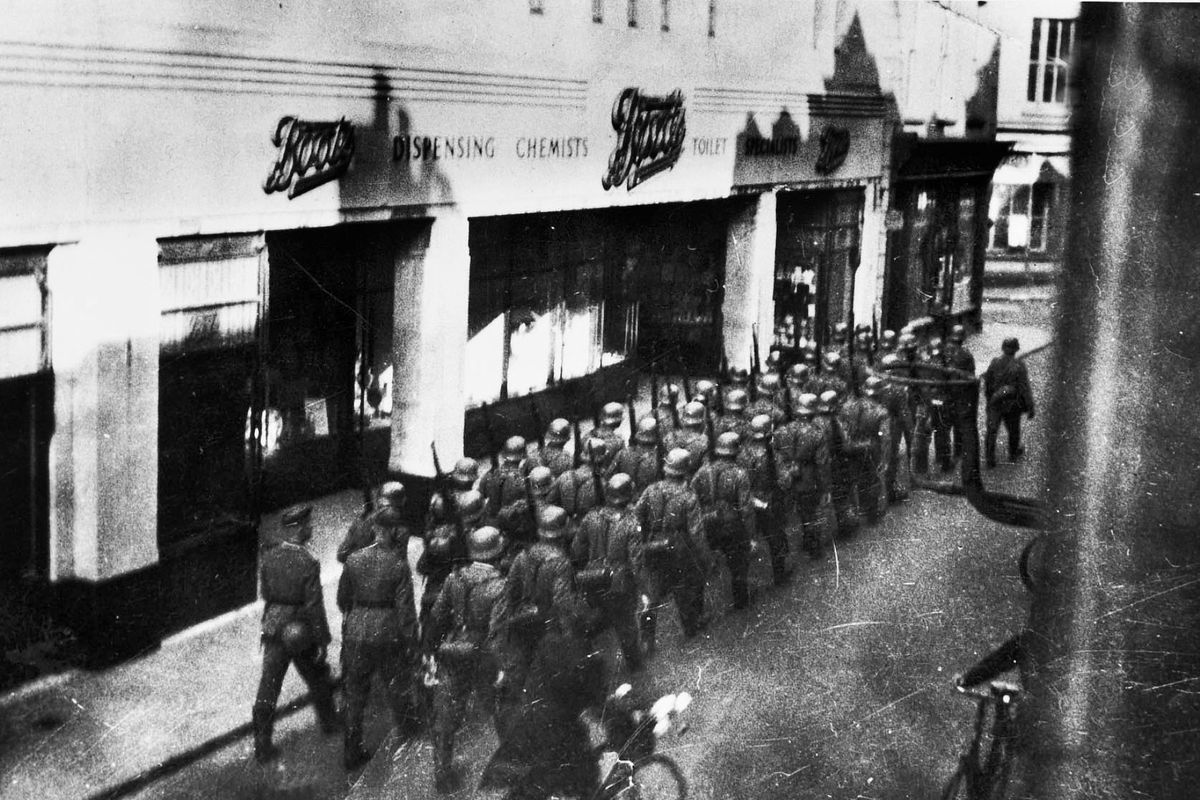
Channel Islands occupation completed by Germans
Germany
'%3e%3cpath fill='%23012169' d='M0 0v30h60V0z'/%3e%3cpath stroke='%23fff' stroke-width='6' d='m0 0 60 30m0-30L0 30'/%3e%3cpath stroke='%23C8102E' stroke-width='4' d='m0 0 60 30m0-30L0 30' clip-path='url(%23b)'/%3e%3cpath stroke='%23fff' stroke-width='10' d='M30 0v30M0 15h60'/%3e%3cpath stroke='%23C8102E' stroke-width='6' d='M30 0v30M0 15h60'/%3e%3c/g%3e%3c/svg%3e)

Military
World War II
4 min read
Updated By: History Editorial Network (HEN)
Published:
Updated:
The occupation of the Channel Islands by German forces marked a pivotal moment in the history of World War II. The Channel Islands, located in the English Channel, were the only part of the British Isles to be occupied by German troops during the conflict. This occupation began shortly after the fall of France, as German forces sought to secure strategic positions in the region. The completion of the occupation allowed Germany to establish a stronghold close to the British mainland, which had significant implications for the war effort. The islands were fortified with military installations, including bunkers and artillery, as part of Germany's broader strategy to deter any potential Allied counteroffensive. The occupation lasted for several years, during which the local population faced strict regulations and hardships under German rule. The impact of this occupation was felt not only by the residents of the islands but also by the broader Allied forces, as it represented a tangible threat to Britain and its defenses.
The occupation of the Channel Islands also had lasting effects on the local population and the geopolitical landscape of the region. The German administration implemented various policies that affected daily life, including curfews, censorship, and the requisitioning of resources. The local economy was heavily impacted, as many businesses were forced to adapt to the new regime. The occupation ended with the liberation of the islands by Allied forces, which restored British control. The legacy of the occupation continues to be a subject of interest, with many residents sharing their experiences and the challenges they faced during this tumultuous period. The Channel Islands serve as a reminder of the complexities of wartime occupation and the resilience of communities in the face of adversity.
#mooflife
#MomentOfLife
#ChannelIslands
#GermanOccupation
#WorldWarIi
#MilitaryHistory
#AlliedForces
Primary Reference
German occupation of the Channel Islands

Explore the Life Moments of
 AI Twin