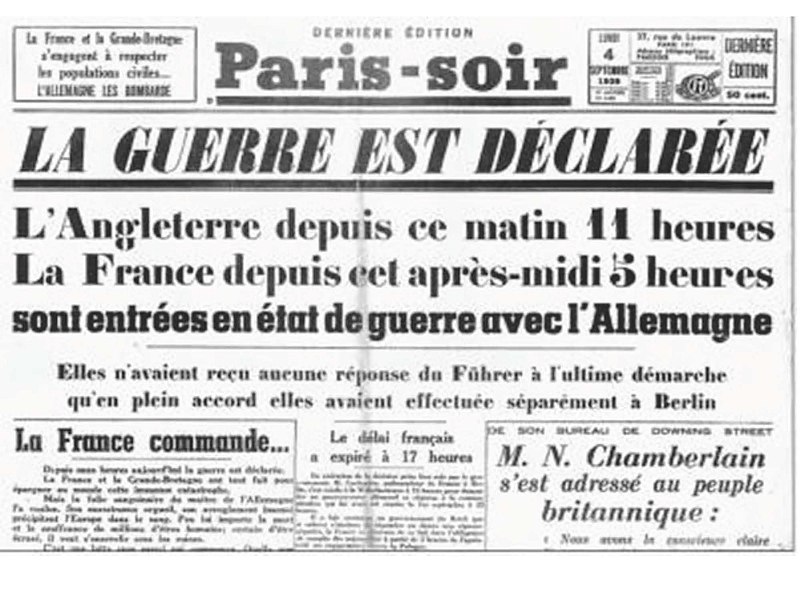
Britain and France declare war on Germany
Germany
World War II
Political History
Military Strategy
4 min read
Updated By: History Editorial Network (HEN)
Published:
Updated:
The declaration of war by Britain and France against Germany marked a pivotal moment in the escalation of global conflict. Following the failure of diplomatic efforts, the British ambassador to Berlin was instructed to deliver an ultimatum to Germany, which went unanswered. Shortly thereafter, the British Prime Minister announced to the public that Britain was officially at war with Germany. This declaration was accompanied by the approval of the National Service (Armed Forces) Act, which mandated conscription for all able-bodied males aged 18 to 41 in the UK, reflecting the urgent need for military personnel. In response to the war, Prime Minister Neville Chamberlain established a new war ministry, which included a more streamlined war cabinet composed of key ministers, including Winston Churchill, who would later play a crucial role in the war effort. The cabinet appointed General Sir Edmund Ironside as the head of the Chief of the Imperial General Staff and General Viscount Gort as the head of the British Expeditionary Force, indicating a strategic military response to the conflict.
The impact of this declaration extended beyond Britain, as the British Viceroy of India also declared war on Germany, highlighting the global nature of the conflict. Australia and New Zealand followed suit, declaring war in solidarity with Britain, while Newfoundland also joined the effort. Concurrently, the French government issued a similar ultimatum to Germany, reinforcing the united front against German aggression. This coordinated response from multiple nations underscored the seriousness of the situation and the collective resolve to confront the threat posed by Germany, setting the stage for a prolonged and devastating conflict that would engulf much of the world.
#mooflife
#MomentOfLife
#BritainFranceGermanyWarDeclaration
#WorldWarIi
#NationalServiceAct
#ConscriptionUk
#GlobalConflict

Explore the Life Moments of
 AI Twin