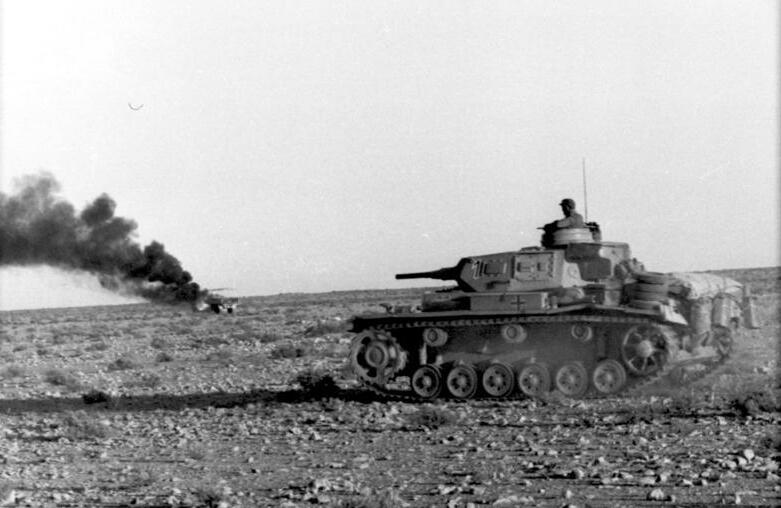
Afrika Korps Advances in North Africa
Germany

Military
World War II
4 min read
Updated By: History Editorial Network (HEN)
Published:
Updated:
The Afrika Korps, a German expeditionary force, played a crucial role in the North African Campaign during World War II. This unit was established to support Italian forces in their efforts against British Commonwealth troops in North Africa. The strategic objective was to secure the Suez Canal and access to Middle Eastern oil fields. The Afrika Korps, under the command of General Erwin Rommel, launched a series of offensives aimed at capturing key locations in Libya and Egypt. One notable advance occurred when the Afrika Korps captured Mersa Brega, a strategic port located north of El Agheila. This victory was part of a broader German offensive that sought to exploit weaknesses in the British defenses and gain control over vital supply routes in the region. The capture of Mersa Brega not only provided the Germans with a logistical advantage but also marked a significant step in their campaign to push further into North Africa.
The impact of the Afrika Korps' advances was profound, as it shifted the balance of power in the region. The successful operations led to increased pressure on British forces, forcing them to retreat and regroup. The advances also had a psychological effect, boosting the morale of Axis forces while simultaneously demoralizing Allied troops. The campaign in North Africa saw intense battles, with both sides suffering significant casualties. The Afrika Korps' tactics, characterized by rapid movement and combined arms operations, became a model for future military engagements. The capture of Mersa Brega and subsequent advances contributed to the larger narrative of the North African Campaign, which would ultimately influence the strategic decisions made by both the Axis and Allied powers in the theater of war.
#mooflife
#MomentOfLife
#AfrikaKorps
#NorthAfricaCampaign
#WorldWarIi
#MersaBrega
#GermanOffensive
Primary Reference
North African campaign

Explore the Life Moments of
 AI Twin