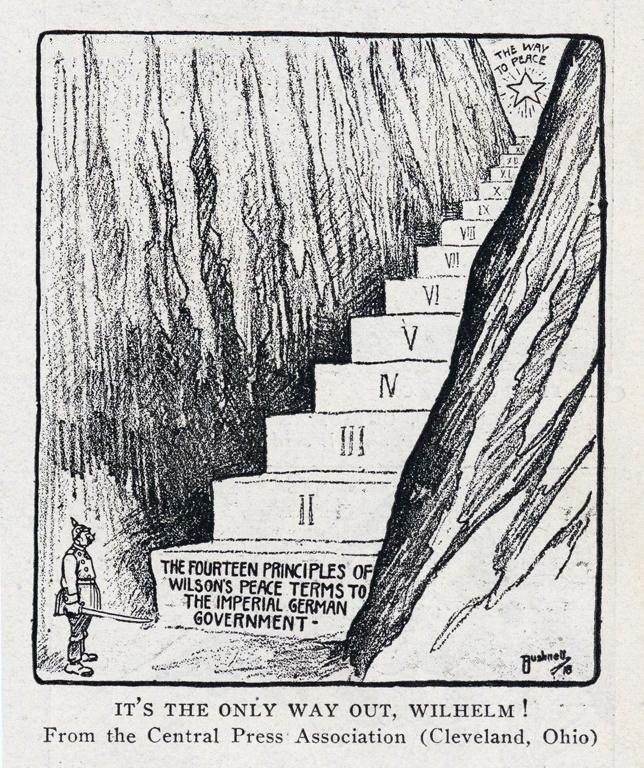
Woodrow Wilson's Fourteen Points: Blueprint for Post-War Stability and Global Governance
Germany
Political
Global Trade
4 min read
Updated By: History Editorial Network (HEN)
Published:
Updated:
Amid the global turmoil of World War I, U.S. President Woodrow Wilson addressed Congress, outlining his vision for a stable, post-war order. He presented 'Fourteen Points,' a series of principles intended to guide peace negotiations and ensure long-term stability. This blueprint emphasized national self-determination, where people could choose their sovereignty without external interference. It also advocated for free trade, reducing economic barriers to foster international cooperation.
Among these points was a significant call for the creation of a League of Nations, an international organization designed to resolve conflicts peacefully and prevent future wars. The principles posed a stark contrast to the prevailing power politics and secret treaties that characterized international relations. Wilson's vision resonated with war-weary populations and influenced the later drafting of the Treaty of Versailles, despite varying degrees of acceptance among the Allies.
Wilson's address also carried broader implications for U.S. foreign policy, marking a shift toward a more active role in global governance. His move was seen as tying the U.S. destiny to the principle of collective security, a foundation for future international establishments. Although not all of the Fourteen Points were adopted, and some met with resistance or modification, they laid down key aspirations that shaped post-war diplomacy and international order.
#WoodrowWilson #FourteenPoints #LeagueofNations #PostWarWorld #SelfDetermination #FreeTrade #WorldWarI #MoofLife
Primary Reference
The Fourteen Points | National WWI Museum and Memorial

Explore the Life Moments of
 AI Twin