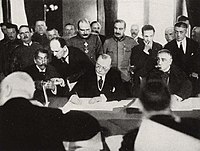
Treaty of Bucharest: Romania's Sacrifices in World War I
Germany
Political
4 min read
Updated By: History Editorial Network (HEN)
Published:
Updated:
During World War I, Romania ended its involvement by signing the Treaty of Bucharest with the Central Powers. The agreement required Romania to make territorial concessions to Austria-Hungary and Bulgaria. Before this, Romania had entered the war on the side of the Allies, hoping to gain territories with a significant ethnic Romanian population.
The country's position on the Eastern Front had become increasingly untenable after Russia's exit from the war due to the Bolshevik Revolution. Isolated and under pressure, Romania negotiated a separate peace. The Treaty of Bucharest marked a cessation of hostilities but demanded significant sacrifices. Romania ceded the southern Dobruja region to Bulgaria and agreed to economic and military terms favorable to the Central Powers, including access to its natural resources.
The impact of the treaty on Romania was substantial, both territorially and economically. The loss of Dobruja hindered Romanian access to the Black Sea, and the imposed terms strained the nation's economy. Additionally, Romanian autonomy was limited under the stringent conditions of the treaty, affecting national sovereignty.
In a larger context, the treaty highlighted the shifting alliances and fortunes during World War I's concluding phase. The Central Powers sought quick resolutions on the Eastern Front to concentrate efforts on the Western Front. Despite Romania's capitulation, it eventually re-entered the war later, aligned again with the Allies, following the tide of military and political changes.
The Treaty's signing underscored the global nature of World War I, involving multiple nations with complex motivations and consequences.
#MoofLife #WWI #Romania #TreatyOfBucharest #CentralPowers #Allies #EasternFront #Dobruja #MilitaryHistory #GlobalConflict
Primary Reference
Romania

Explore the Life Moments of
 AI Twin