The Kerensky Offensive: Russian military maneuver in World War I faces challenges and setbacks.
Germany
Political
Military
4 min read
Updated By: History Editorial Network (HEN)
Published:
Updated:
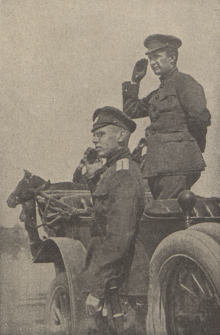
The Kerensky Offensive, named after Prime Minister Alexander Kerensky, stands out as a critical Russian military maneuver during World War I. Initiated by the Russian Provisional Government, the offensive aimed to break through Austro-Hungarian lines on the Eastern Front. Kerensky, then a dominant political figure, sought to rejuvenate the Russian army's morale and demonstrate the government's commitment to the Allied cause.
Strategically, the offensive targeted the Galician region, leveraging an initial advantage in manpower and artillery. Russian forces, comprised of several divisions, initially experienced success. Using the element of surprise and concentrated firepower, they managed to advance and capture key positions previously held by the Central Powers.
However, this initial success proved unsustainable. The lack of consistent supplies, poor coordination, and low troop morale eventually hindered progression. The Russian troops encountered staunch resistance from well-entrenched Austro-Hungarian forces, leading to significant casualties. Moreover, internal strife within the Russian ranks, exacerbated by the turbulent political situation at home, further stalled the offensive.
By the operation's end, the Russian army had failed to secure a decisive breakthrough. The Kerensky Offensive's stalling highlighted the operational and strategic challenges faced by the Provisional Government. It also amplified existing discontent among soldiers and civilians, contributing to the subsequent Bolshevik Revolution.
This event holds pivotal lessons in the complexity of war logistics, the importance of morale in military strategy, and the impact of political stability on war efforts.
#WorldWarI #EasternFront #MilitaryHistory #RussianRevolution #MoofLife
Primary Reference
Eastern Front / 1.0 / handbook - 1914-1918-Online (WW1 ...
Explore the Life Moments of
 AI Twin