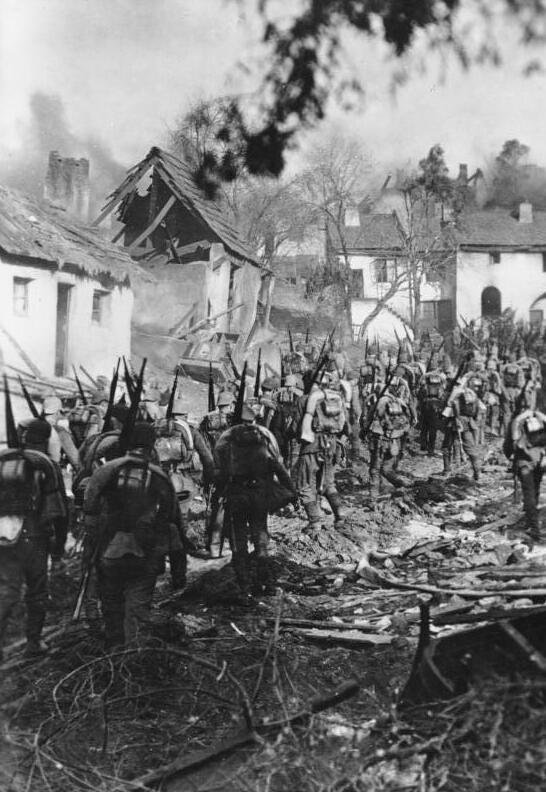
The Battle of Tannenberg: German victory over Russian forces shifts WWI Eastern Front tide.
Germany
War
4 min read
Updated By: History Editorial Network (HEN)
Published:
Updated:
The Battle of Tannenberg transpired during World War I, involving a conflict between German and Russian forces in East Prussia. The situation on the Eastern Front saw the Russian army mobilizing swiftly, aiming to capitalize on the early war chaos. The German Eighth Army, commanded by Generals Paul von Hindenburg and Erich Ludendorff, faced the Russian First and Second Armies led by Generals Alexander Samsonov and Paul von Rennenkampf.
The German forces utilized efficient rail networks to concentrate their troops, implementing a strategy devised by General Ludendorff and Colonel Max Hoffmann. This tactic enabled them to outmaneuver the Russian army. Ignoring Russian radio communications proved crucial as the Russians transmitted messages unencrypted, allowing the Germans to anticipate and counter their moves effectively.
In the ensuing engagement, German forces encircled Samsonov's Second Army around the forests of Tannenberg. The encirclement and the destruction of the Russian Second Army resulted in a staggering loss of over 50,000 Russian soldiers, with approximately 92,000 taken prisoner. In contrast, the Germans suffered around 13,000 casualties.
This battle greatly weakened the Russian military presence on the Eastern Front, severely impacting their morale and military capacity. It prevented the Russians from advancing further into German territory. The victory at Tannenberg elevated Hindenburg and Ludendorff as prominent military figures within Germany.
Tannenberg's outcome provided strategic respite for Germany, allowing it to focus more resources on the Western Front. The battle demonstrated the crucial impact of intelligence and swift troop movements in modern warfare.
#BattleOfTannenberg #WorldWarI #EasternFront #MilitaryStrategy #MoofLife
Primary Reference
Battle of Tannenberg | Facts, Outcome, & Significance | Britannica
Explore the Life Moments of
 AI Twin