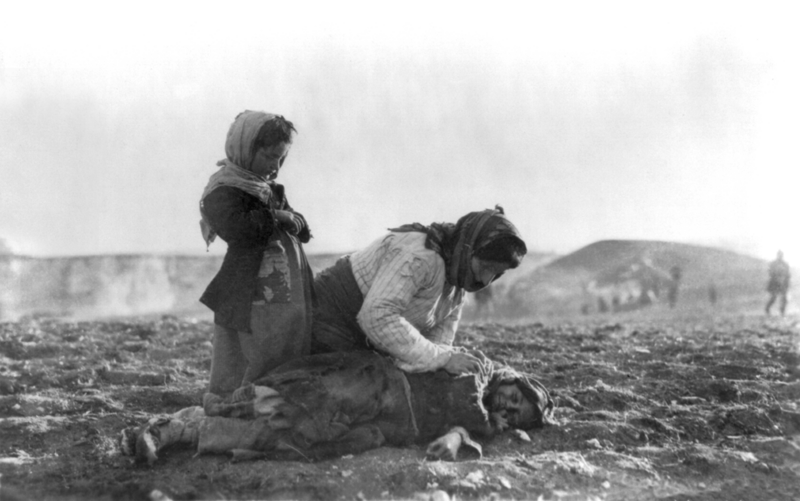
The Armenian Genocide continued, with widespread deportations, forced marches, and atrocities across the Ottoman Empire, resulting in significant loss of life.
Germany
7 min read
Updated By: History Editorial Network (HEN)
Published:
Updated:
In November 1915, the Armenian Genocide persisted unabated across the Ottoman Empire, with widespread deportations, forced marches, and brutal massacres resulting in staggering loss of life among Armenian communities. By this point, the genocide had claimed the lives of hundreds of thousands of Armenians, and the Ottoman authorities’ tactics had become chillingly systematic. Armenians from across the empire were swept up in organized deportations, herded onto long, forced marches, or confined to makeshift camps in desert regions where death from starvation, disease, and exposure was rampant.
The Ottoman government, dominated by the Committee of Union and Progress (CUP), maintained a rigid policy of removing Armenian populations under the guise of wartime security, labeling them a threat to the state. However, the true intent was clear in the treatment of the deportees, who were offered no support or resources during their marches. During this period, Ottoman forces and local paramilitary groups frequently targeted Armenian convoys for brutal attacks. Those who did survive the initial marches found themselves in desolate regions such as the deserts of Syria and Mesopotamia, where they were left without shelter, food, or water. The camp conditions were unlivable, with rampant disease outbreaks and almost no medical care, ensuring high mortality rates even among those who reached these sites.
Throughout November, international observers documented the continuing atrocities. Accounts from foreign diplomats, missionaries, and journalists in the region described the horrific conditions Armenians endured. Henry Morgenthau Sr., the U.S. Ambassador to the Ottoman Empire, continued his reports to the U.S. government, detailing the systematic nature of the massacres and the clear intent to destroy the Armenian population. While news of these atrocities generated some public outcry, the ongoing global conflict limited the Allied powers' ability to respond effectively.
For the Ottoman government, the genocide had become a tool to reshape the demographic makeup of its territories, effectively purging Armenians from lands where they had lived for generations. Churches, schools, and entire communities that had once been vibrant centers of Armenian life were decimated, with properties often seized or redistributed. Armenian cultural landmarks were left abandoned, destroyed, or repurposed, erasing much of the historical Armenian presence from the region.
The events of November 1915 underscore the devastating scope and intensity of the Armenian Genocide, as Ottoman policies led to the deaths of men, women, and children by the thousands. This dark chapter left a legacy of loss and trauma that Armenian communities around the world still carry to this day. The genocide is memorialized annually as a reminder of the atrocities suffered and as a call for recognition and justice.
#ArmenianGenocide #WWI #GenocideAwareness #HumanRights #MomentsOfLife #MoofLife_Moment #MoofLife
Primary Reference
Armenia | Holocaust and Genocide Studies | College of Liberal Arts
Explore the Life Moments of
 AI Twin