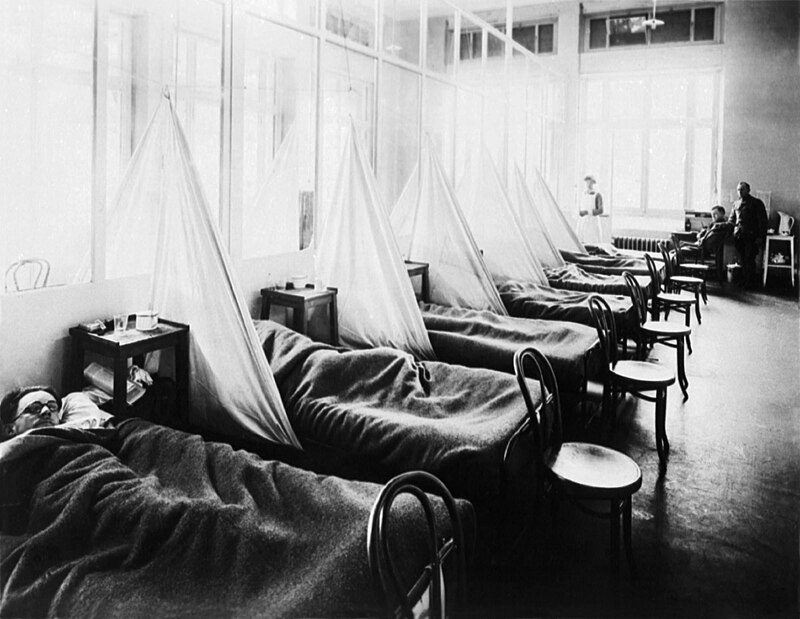
Spanish flu's devastating impact on military readiness during World War I.
Germany
Economic Downturn
5 min read
Updated By: History Editorial Network (HEN)
Published:
Updated:
During the latter part of World War I, the Spanish flu continued to spread rapidly among soldiers and civilians. It caused alarmingly high infection rates and severely impacted military readiness across multiple nations engaged in the conflict. The flu pandemic began in the spring within the crowded and unsanitary conditions of military camps and quickly spread to civilian populations, exacerbating the already dire situation.
More than 500 million people worldwide were affected by the Spanish flu, with the mortality rate being particularly high among young adults, including many active-duty soldiers. This posed a significant challenge to the war efforts as it diminished both the number of available troops and their ability to perform. High infection rates led to overwhelmed medical facilities, a shortage of medical staff, and widespread fear and uncertainty.
The flu's impact on the military was pronounced. Infected soldiers were unable to fight and required extensive care, leading to substantial losses in manpower. Transportation of troops and the gathering of large numbers of individuals in close quarters for military operations facilitated further spread of the virus. Nations strained to keep up with the dual pressures of fighting a war and managing a public health crisis.
Detailed records from various military units indicate that entire battalions were rendered ineffective, with some suffering a loss of up to 50% of their fighting strength. Notable incidents include the spread of the flu at military bases and on troop transports, where the virus could infect hundreds within days given the enclosed environments.
The Spanish flu pandemic intertwined with the war's dynamics, adding to the hardships endured by soldiers and civilian populations alike. The virus did not discriminate, affecting all classes and sectors of society, thus highlighting the fragility of human health during periods of intense global conflict.
By adversely affecting military readiness and civilian morale, the flu pandemic played a crucial role in shaping the events and outcomes of World War I. Efforts to control the pandemic, including quarantines and public health campaigns, were limited by the ongoing war.
#DiseaseImpact #WarAndHealth #MilitaryReadiness #PandemicHistory #WWI #SpanishFlu #HistoricalPandemics #MoofLife
Primary Reference
The Story of Influenza - The Threat of Pandemic Influenza - NCBI ...
Explore the Life Moments of
 AI Twin