Russian Invasion of East Prussia: Prelude to Eastern Front Conflict
Germany
Political
Military
4 min read
Updated By: History Editorial Network (HEN)
Published:
Updated:
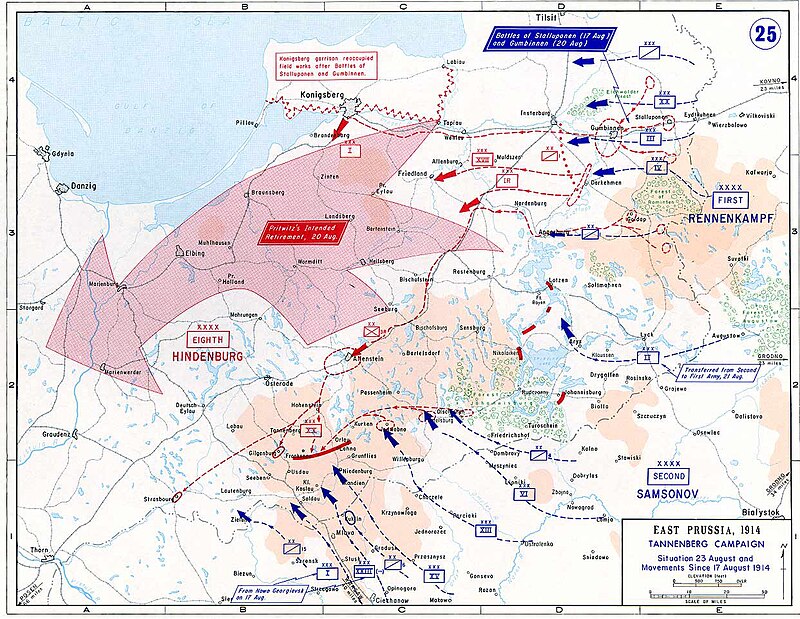
Amid the tensions of World War I, the Russian Empire launched an invasion of East Prussia. This action marked the beginning of the major Eastern Front conflict against Germany. The invasion was part of the broader strategy to relieve pressure on the Western Front by forcing Germany to divert troops to the east. The Russian forces, composed of the First and Second Armies, crossed the border into German territory, aiming to encircle and defeat the German Eighth Army.
The Russian incursion into East Prussia initiated a series of confrontations, including the notable Battle of Tannenberg. The German response, under the command of Generals Paul von Hindenburg and Erich Ludendorff, resulted in significant Russian casualties and the eventual encirclement and annihilation of the Russian Second Army. This clash demonstrated the high stakes and the intense military strategies employed by both sides in the Eastern Front campaign.
The invasion had profound implications. For Germany, it was a wake-up call to the threat posed by Russian forces, necessitating a strategic reallocation of resources. For Russia, the defeat at Tannenberg was a severe blow, impacting morale and military capability. Casualties on both sides were substantial, underscoring the brutal nature of the conflict.
This moment underscored the complexity of World War I, with multiple fronts and numerous nations involved in a struggle that reshaped the geopolitical landscape. The Eastern Front battles significantly influenced the course of the war, highlighting the critical importance of strategic planning and the harsh realities of early 20th-century warfare.
#WWI #EasternFront #RussianEmpire #Germany #MilitaryHistory #MoofLife
Primary Reference
Battle of Tannenberg | Facts, Outcome, & Significance | Britannica
Explore the Life Moments of
 AI Twin