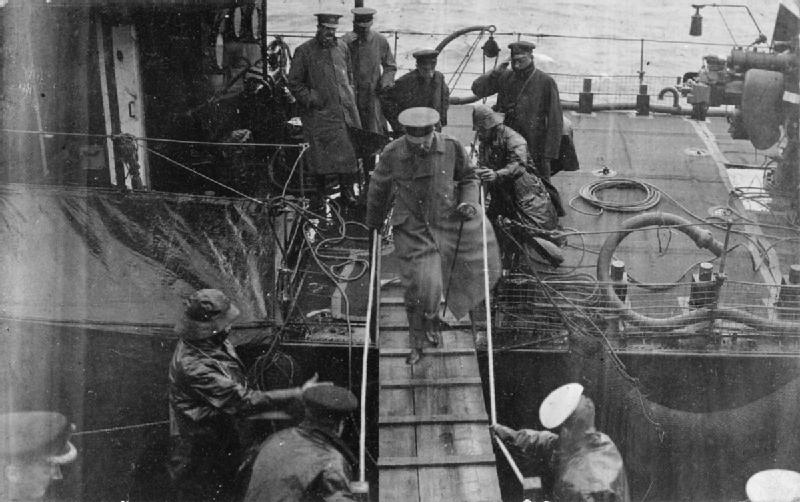
Loss of Lord Kitchener on HMS Hampshire in WWI: Impact on British war effort.
Germany
Political
Military
4 min read
Updated By: History Editorial Network (HEN)
Published:
Updated:
Lord Horatio Kitchener, the British Secretary of State for War during World War I, lost his life when the ship he was traveling on, HMS Hampshire, was sunk by a German mine off the Orkney Islands. Kitchener was on a mission to Russia for discussions aimed at bolstering the Eastern Front against the Central Powers. The loss of the Hampshire, and Kitchener with it, dealt a considerable blow to the British war effort.
Kitchener had risen to prominence through his military service, which included key roles in the Sudan and the Second Boer War. As the figurehead of Britain’s military campaign during World War I, he was responsible for organizing and equipping the British Army, notably initiating a massive recruitment drive that significantly bolstered British forces.
The sinking of HMS Hampshire resulted in the loss of 737 lives, with only 12 survivors. The incident not only caused the death of one of Britain’s most influential military leaders but also highlighted the perils of naval warfare and the effectiveness of German mines in disrupting Allied operations. Following the sinking, there was an immediate impact on British morale and war propaganda, as Kitchener was a pivotal symbol of British resolve.
This event underscored the volatility and unpredictability of wartime logistics and operations. It also raised questions about the decision-making and intelligence that led to Kitchener's voyage aboard the ill-fated ship. The strategic implications of Kitchener's death were felt across the Allied political and military hierarchies, leading to adjustments in leadership and strategy.
#LordKitchener #WWI #NavalWarfare #BritishMilitary #HMSHampshire #WarEffort #MilitaryHistory #MoofLife
Primary Reference
Herbert Kitchener, 1st Earl Kitchener - Wikipedia

Explore the Life Moments of
 AI Twin