German Ultimatums Escalate Tensions in Europe
Germany
Political
Global Trade
4 min read
Updated By: History Editorial Network (HEN)
Published:
Updated:
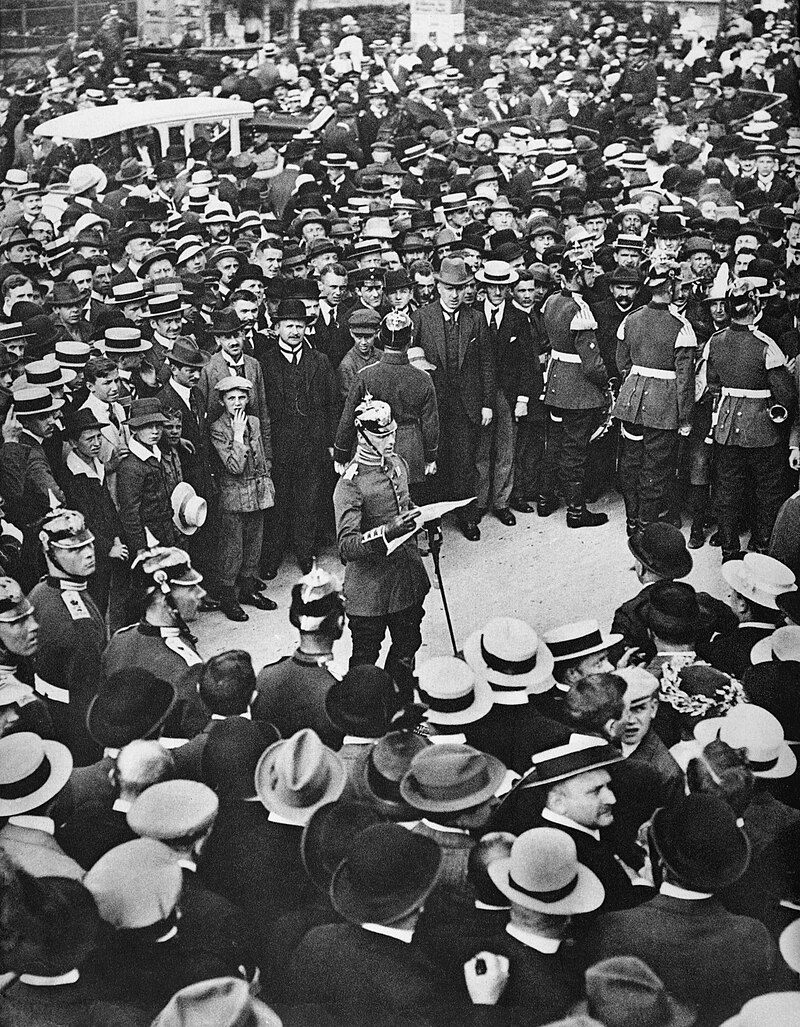
The German government issued a series of ultimatums to Russia and France. The demand to Russia was directed at halting its mobilization, perceived by Germany as an immediate threat. Simultaneously, Germany demanded assurances from France that it would remain neutral in the expected conflict between Germany and Russia. These demands were based on concerns of a two-front war, as Germany sought to avoid simultaneous military engagements with both Russia and France.
Russia's mobilization had started in response to Austria-Hungary's declaration of war on Serbia, following the assassination of Archduke Franz Ferdinand. Germany's ultimatum to Russia was a strategic attempt to isolate Austria-Hungary's adversary. However, Russia's refusal to cease its mobilization underscored its support for Serbia and opposed the Austro-Hungarian aggression. This refusal marked a crucial escalation, drawing the alliances into the larger conflict.
The ultimatum to France aimed to secure a non-engagement guarantee, thereby preventing France from joining the conflict against Germany. France, allied with Russia, did not accede to Germany's demand for neutrality, preparing for potential hostilities.
The German ultimatums and the subsequent rejections heightened tensions among the European powers. Germany's actions illustrated the pre-war alliances and the complex web of mutual defense agreements. These ultimatums and their outcomes were pivotal in the sequence of events leading to the broader outbreak of World War I.
#WWI #Diplomacy #Geopolitics #MilitaryStrategy #History #MoofLife
Primary Reference
How The World Went To War In 1914 | Imperial War Museums

Explore the Life Moments of
 AI Twin