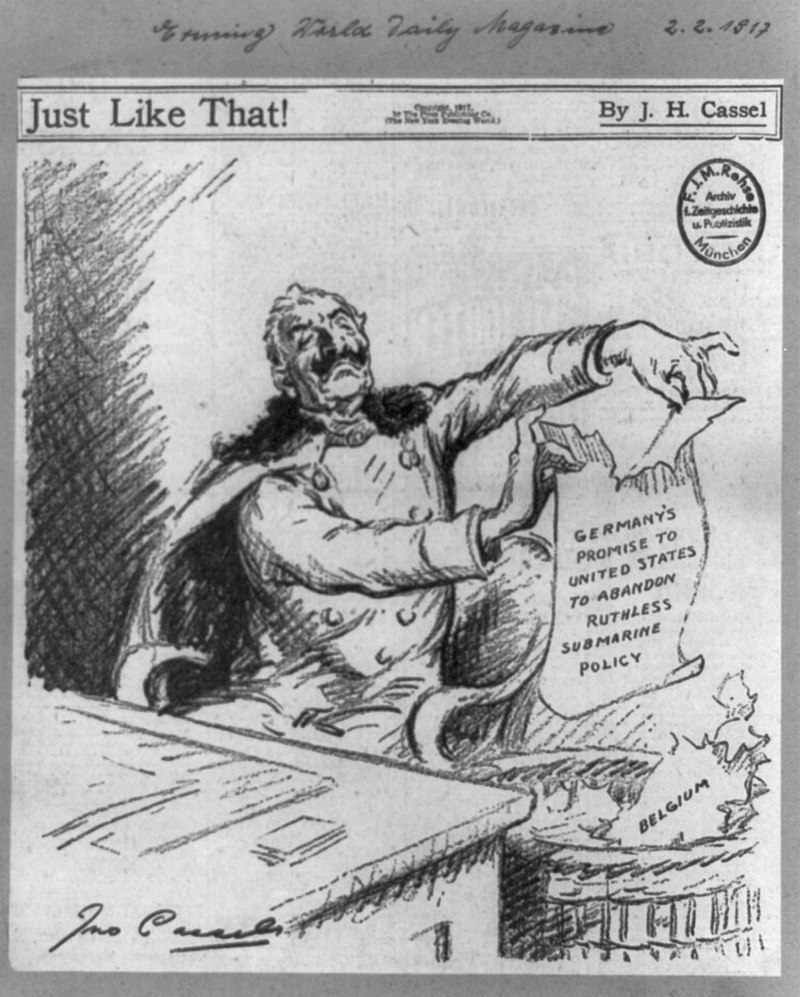
German U-boat attacks disrupt shipping, weaken economies, and spark diplomatic tensions during World War I.
Germany
Political
4 min read
Updated By: History Editorial Network (HEN)
Published:
Updated:
During World War I, German U-boat attacks in the Atlantic were a significant element of the broader naval strategy aimed at disrupting Allied and neutral shipping. This strategy intended to cut off supplies and weaken the economic stability of opposing nations. The German High Command had recognized the effectiveness of submarines, known as U-boats, in targeting merchant vessels critical to the Allied war effort. These attacks intensified as the war progressed, aiming to create a blockade and enforce maritime control.
German U-boats pursued unrestricted submarine warfare, targeting not only military ships but also commercial and passenger vessels. This approach had i a pronounced impact on the movement of goods and people, severely disrupting trade routes and causing substantial material losses. For instance, significant losses were recorded with thousands of tons of shipping sunk, contributing to shortages of essential supplies in Allied nations.
The attacks were not limited to enemy nations; neutral shipping also suffered, leading to diplomatic tensions. Neutral countries, often trading partners with both sides of the conflict, found themselves in precarious positions, as the destruction of their vessels increased pressure to either support the Allies or face continued losses.
Statistically, the German U-boat campaign was initially quite successful. Early in the war, U-boats sank approximately 300,000 tons of Allied and neutral shipping per month. However, as countermeasures such as the convoy system were developed by the Allies, the effectiveness of the U-boat campaign diminished. Despite this, the fear and uncertainty sown by submarine warfare persisted throughout the conflict.
#MoofLife #WorldWarI #SubmarineWarfare #GermanUboats #NavalWarfare #AtlanticCampaign #AlliedShipping #NeutralShipping
Primary Reference
The German U-Boat Campaign Of WW1 That Almost Broke Britain

Explore the Life Moments of
 AI Twin