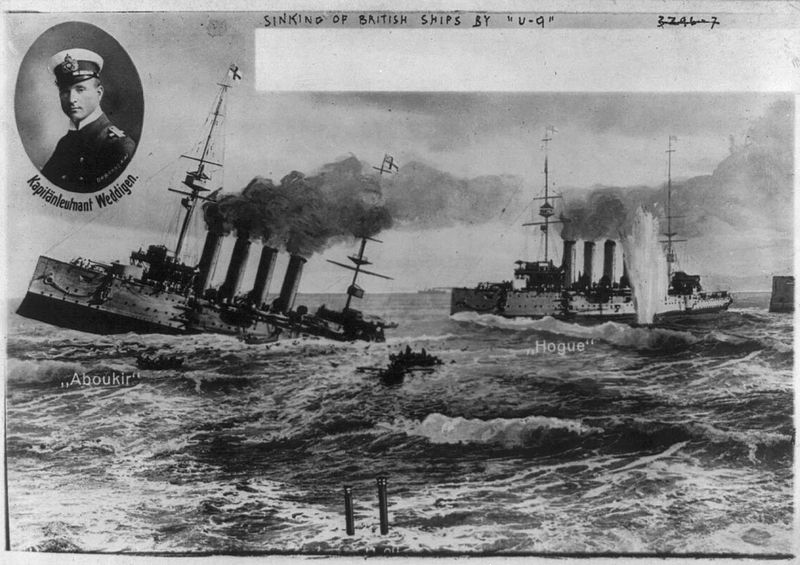
German U-boat attack shifts naval strategy in WWI after sinking three British cruisers.
Germany
Military;
3 min read
Updated By: History Editorial Network (HEN)
Published:
Updated:
During an engagement in World War I, German U-boats demonstrated the formidable threat of submarine warfare by sinking three British cruisers—HMS Aboukir, HMS Hogue, and HMS Cressy. The event unfolded when the German submarine U-9, commanded by Otto Weddigen, patrolled the North Sea and encountered the three cruisers.
The British ships were older armored cruisers tasked with patrolling against German naval aggression. HMS Aboukir was the first to be torpedoed and sunk. Misjudging the situation, the commanders of HMS Hogue and HMS Cressy assumed Aboukir had struck a mine. They halted to rescue survivors, making themselves easy targets. U-9 fired torpedoes at HMS Hogue, sinking it, followed by an attack on HMS Cressy, resulting in its sinking. The engagement resulted in the loss of 1,459 lives and significantly boosted German morale.
The sinking of the three cruisers highlighted the effective use of submarines in naval warfare and forced the British Royal Navy to change its naval strategy. The event emphasized the vulnerability of surface ships to underwater attacks and marked a shift towards anti-submarine measures in naval operations.
#MoofLife #NavalWarfare #WWI #SubmarineThreat #UBoatAttack #BritishNavy #GermanNavy
Primary Reference
Woodrow Wilson, World War I, and Freedom of the Seas

Explore the Life Moments of
 AI Twin