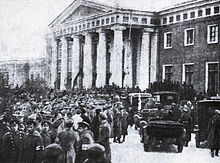
Civil Unrest in Petrograd Leads to Tsar's Downfall amid World War I
Germany
Political
Social Unrest
5 min read
Updated By: History Editorial Network (HEN)
Published:
Updated:
Amidst World War I, Petrograd (modern-day St. Petersburg) witnessed a surge of strikes and protests due to pervasive food shortages, military setbacks, and widespread economic hardship. The strain of ongoing conflict left Russia's infrastructure and resources depleted, creating a dire scenario for its citizens. Frustrations that had been simmering for years reached a boiling point as people struggled to survive amid scarcity and rationing.
The city erupted as workers, including many women, marched through the streets demanding bread and better working conditions. Factories, already under immense pressure to produce war supplies, saw massive walkouts and demonstrations. Soldiers, many of whom were disillusioned by the war and suffering themselves, began to sympathize with the protesters and joined their cause instead of suppressing it.
The Tsarist regime, failing to address the mounting crises effectively, faced a rapid erosion of support. Local police and military units found themselves overwhelmed and unable to maintain order. The Duma, Russia's legislative body, engaged in urgent sessions as it attempted to navigate the escalating unrest. The protests in Petrograd quickly evolved into a larger movement calling for political reform and an end to autocratic rule.
This widespread civil disobedience significantly weakened the Tsar's power, leading to a pivotal shift in Russia's governance. With both civilians and soldiers increasingly participating in the uprisings, it became impossible for the Tsarist system to continue unopposed. The abdication of Tsar Nicholas II soon followed, which marked the end of centuries of Romanov rule and paved the way for the provisional government.
This period marked a transformative moment in Russian history, setting the stage for further revolution and the eventual rise of the Soviet Union. It underscored the profound impact of wartime on domestic stability and highlighted the explosive intersection of military, economic, and social issues.
#RussianRevolution #PetrogradProtests #EconomicHardship #FoodShortages #MilitaryFailures #EndOfTsaristRule #MoofLife
Explore the Life Moments of
 AI Twin