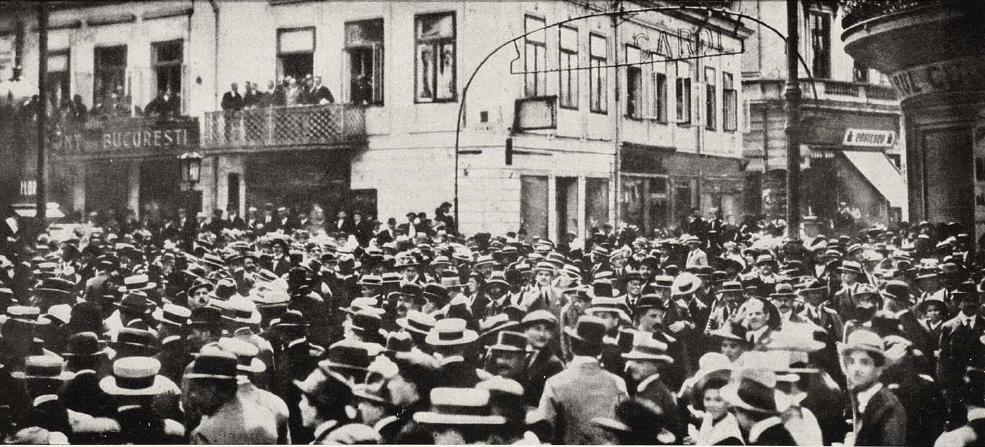
Central Powers' Consolidation in Romania: Strategic Control over Vital Resources in World War I
Germany
Economic Downturn
4 min read
Updated By: History Editorial Network (HEN)
Published:
Updated:
During World War I, the Central Powers intensified their efforts to consolidate control over the territories they had occupied, including Romania. This consolidation process was critical as it allowed them to access and secure vital natural resources necessary to sustain their war efforts. Romania, rich in natural resources, particularly oil fields, became a focal point in the war strategy of the Central Powers.
Romania, initially neutral, joined the Allies with the promise of territorial gains but faced severe setbacks. After a series of military defeats, a significant portion of Romania, including the capital Bucharest, fell under the control of the Central Powers. The occupation enabled them to tap into Romania’s substantial oil reserves, a resource of immense strategic value during the conflict. Oil was crucial to fueling machines of war, including airplanes, tanks, and trucks, which were essential for modern warfare.
The impact of securing Romanian oil fields was significant. It bolstered the Central Powers’ ability to sustain prolonged military engagements on multiple fronts. Economically, it deprived the Allies of potential access to these resources. Thus, the control over Romania not only provided a tactical advantage but also had broader repercussions on the war’s resources and logistics.
Towards the end, the control over Romanian territories became part of the larger strategic maneuvers of the World War I era, reflecting the critical importance of resource control in wartime strategy. The occupation underscored the interconnected nature of military success, economic resources, and geopolitical power plays that defined the era.
#WorldWarI #RomanianOccupation #CentralPowers #WarResources #OilFields #MoofLife
Primary Reference
Romania

Explore the Life Moments of
 AI Twin