Capture of Ramadi: British forces defeat Ottomans, secure strategic town in Mesopotamia.
Germany
Military
Historic
4 min read
Updated By: History Editorial Network (HEN)
Published:
Updated:
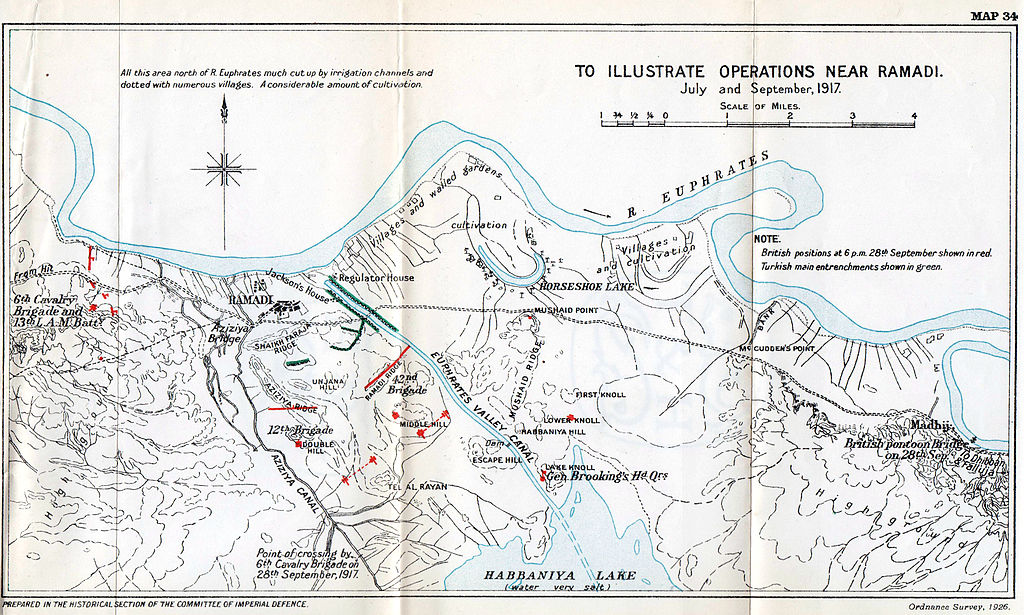
The Battle of Ramadi took place when British forces captured the Ottoman-held town of Ramadi in Mesopotamia. Situated west of Baghdad, Ramadi was strategically important for controlling the surrounding region and ensuring the security of British supply lines. Prior to the battle, the Ottomans had fortified the town, anticipating British advances. The British forces, commanded by Major General H.T. Brooking, approached with a carefully devised plan to outmaneuver the Ottoman defenses.
The battle commenced with an initial reconnaissance phase followed by artillery bombardments aimed at weakening the Ottoman fortifications. British forces utilized a combination of infantry, cavalry, and armored cars to advance on multiple fronts, creating confusion and preventing effective Ottoman counter-attacks. After intense fighting, the British managed to breach the main defensive lines and entered the town, leading to the eventual surrender of the remaining Ottoman troops.
The capture of Ramadi resulted in around 4,000 Ottoman prisoners and a substantial amount of military equipment. This victory significantly boosted British morale and further secured their position in Mesopotamia. It also disrupted the Ottoman's ability to launch offensives in the region, consolidating British control over vital communications and transport routes.
This operation was a part of a broader British campaign to stabilize Mesopotamia and protect British interests, including oil resources and trade routes. The success at Ramadi demonstrated the effectiveness of coordinated military strategy and contributed to the larger Allied efforts in the Middle Eastern theater of World War I.
#MoofLife #WWI #MilitaryHistory #RamadiBattle #BritishForces #OttomanEmpire #Mesopotamia #StrategicVictory
Primary Reference
Mesopotamia campaign | National Army Museum
Explore the Life Moments of
 AI Twin