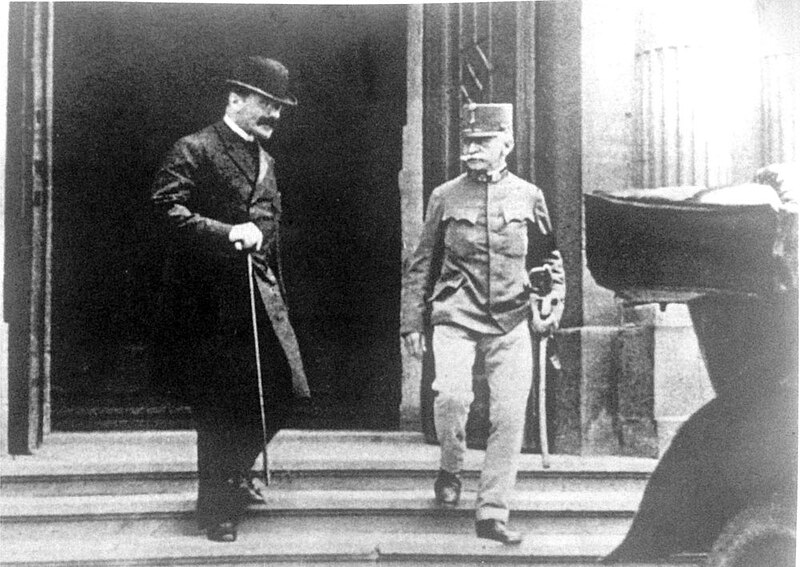
Austria-Hungary ultimatum to Serbia leads to WWI alliances and conflict escalation.
Germany
Political
Global Trade
4 min read
Updated By: History Editorial Network (HEN)
Published:
Updated:
Austria-Hungary issued an ultimatum to Serbia, holding it responsible for the assassination of Archduke Franz Ferdinand and his wife, Sophie. The ultimatum contained ten specific demands, including one that required Serbia to allow Austrian officials to participate in the investigation and judicial proceedings against those caught in anti-Austrian activities.
The assassination had intensified tensions between the two countries, which were already high due to disputes in the Balkans. Austria-Hungary saw this as an opportunity to curb Serbian nationalism, which it perceived as a threat to its territorial integrity. The demands were designed to be unacceptable, to justify military action if Serbia did not comply fully.
Serbia agreed to most of the demands but sought clarification or negotiation on some points. Austria-Hungary rejected Serbia's partial acceptance as insufficient, leading to a breakdown in diplomatic relations.
This ultimatum and the subsequent reaction set a chain of alliances into motion. Russia, bound by Slavic ties and treaties, mobilized in support of Serbia. Germany, allied with Austria-Hungary, declared its support for the ultimatum. France, aligned with Russia, prepared for conflict. Britain, linked by treaties to France and Russia, became involved as tensions escalated.
The result was a rapid escalation into a broader conflict, which involved multiple nations and led to catastrophic global consequences. The issuing of the ultimatum can thus be seen as a pivotal moment that contributed directly to the onset of World War I.
#MoofLife #WorldWarI #History #AustriaHungary #Serbia #WWI #GlobalConflict #Diplomacy #Tensions #AllianceSystem
Primary Reference
Austria‑Hungary issues ultimatum to Serbia | July 23, 1914 | HISTORY

Explore the Life Moments of
 AI Twin