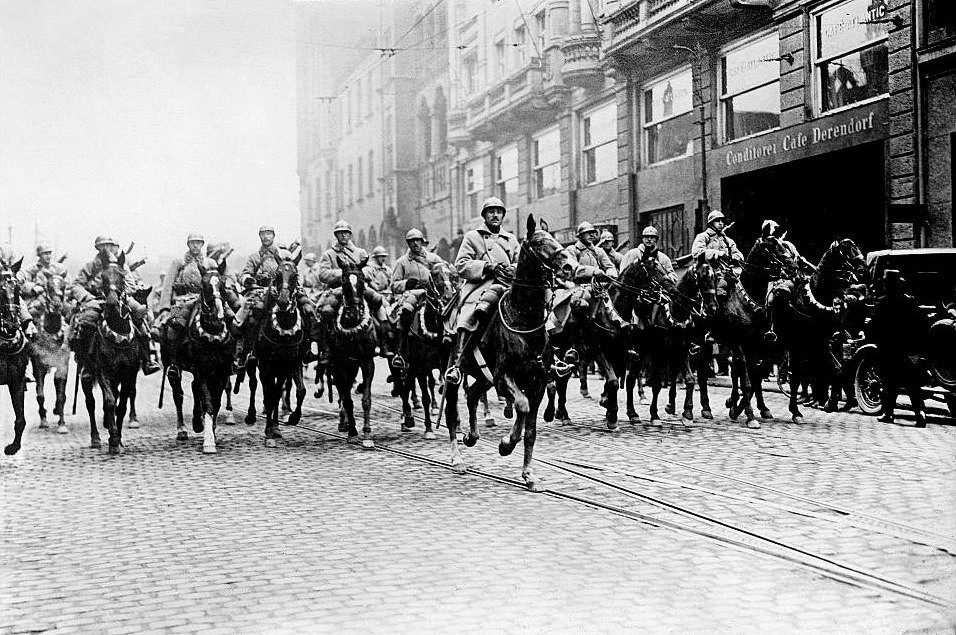
Allied Occupation of Rhineland after WWI: Ensuring Compliance and Preventing German Aggression
Germany
Political
Global Trade
5 min read
Updated By: History Editorial Network (HEN)
Published:
Updated:
Following the cessation of hostilities in World War I, the armistice that brought an end to the conflict contained provisions for the occupation of the Rhineland by Allied forces. This action served as a strategic measure to ensure German compliance with the terms set forth in the armistice agreements. Allied troops began their occupation by establishing a significant presence within the Rhineland area, a move that was critical for maintaining post-war stability and preventing any resurgence of military aggression by Germany.
The occupation of the Rhineland was one of the key components outlined in the armistice, alongside the cessation of hostilities and the withdrawal of German troops from occupied territories. The Rhineland, located along Germany's western border, held considerable strategic importance due to its industrial capacity and its geographic proximity to France and Belgium.
Allied forces, including units from France, Belgium, the United Kingdom, and the United States, coordinated efforts to occupy designated zones within the Rhineland. These zones included key cities and industrial areas, ensuring that the region remained demilitarized and under Allied supervision. The occupation facilitated the enforcement of disarmament clauses and helped monitor the compliance of the German government with the stipulated reparations and territorial concessions.
The presence of Allied forces in the Rhineland marked a pivotal step in transitioning from wartime to peacetime, as it provided a deterrent against any potential violations of the armistice terms by Germany. This occupation was part of a broader framework established by the Treaty of Versailles, which later formalized the conditions for the peace settlement and delineated responsibilities for war reparations.
The occupation had significant political and economic implications, contributing to the fragile post-war environment in Europe. It also set the stage for future treaties and negotiations aimed at fostering stability and preventing further conflicts on the continent.
#Armistice #AlliedForces #RhinelandOccupation #WWI #PostWarAgreements #MoofLife
Primary Reference
With “Spartan Courage and Marine Grit”

Explore the Life Moments of
 AI Twin