Mozart's Little Masonic Cantata Premiere: Celebrating Freemasonry through Music.
Vienna, Austria
Arts
Culture
4 min read
Updated By: History Editorial Network (HEN)
Published:
Updated:
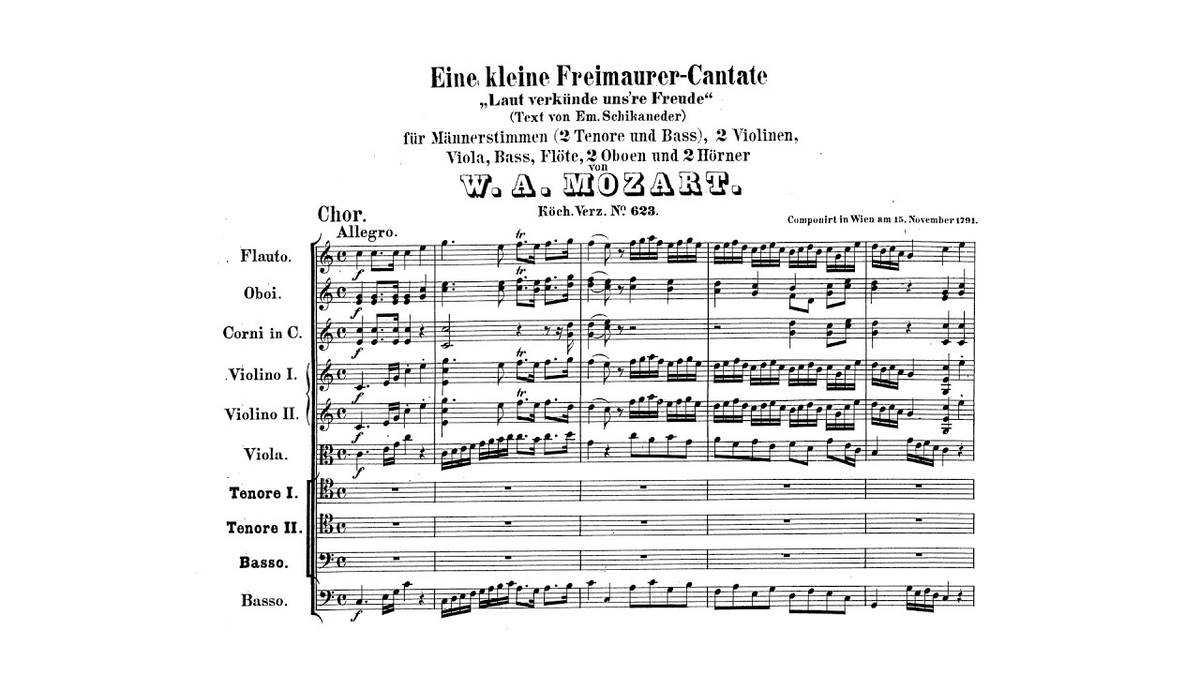
On 18/11/1791, Wolfgang Amadeus Mozart conducted the premiere of his Eine kleine Freimaurer-Kantate (Little Masonic Cantata), K. 623, titled Laut verkünde unsre Freude ("Loudly Proclaim Our Joy"), in Vienna. The work had been completed and entered into Mozart’s personal catalogue three days earlier on 15/11/1791, making it the final composition he fully finished during his lifetime. The cantata was written for the consecration of a new temple of the Masonic lodge Zur neugekrönten Hoffnung, also known as New Crowned Hope, with which Mozart was affiliated. The performance took place just over two weeks before his death on 05/12/1791.
Mozart personally conducted the premiere, and contemporary recollections describe that he appeared encouraged by the reception. Accounts indicate he felt “elated” after the performance, a brief improvement in spirits during the final phase of his life. The text of the cantata is widely attributed to Emanuel Schikaneder, Mozart’s friend, fellow Mason, and librettist of The Magic Flute, although some scholars have proposed alternative authorship, including Karl Ludwig Giesecke, another lodge member active in Viennese theatrical and Masonic circles. Scored for vocal soloists, chorus, and orchestra, the work reflects ceremonial Masonic themes of fraternity, enlightenment, and communal celebration.
The premiere on 18 November became Mozart’s last public conducting appearance. Within two days, by 20/11/1791, his health deteriorated significantly, and he became permanently bedridden during the illness that ended his life fifteen days later. The cantata therefore stands as the final completed entry in his thematic catalogue and the last work he heard performed under his own direction.
#Mozart
#LittleMasonicCantata
#Freemasonry
#ClassicalMusic
Primary Reference
Kleine Freimaurer-Kantate
Explore the Life Moments of
 AI Twin