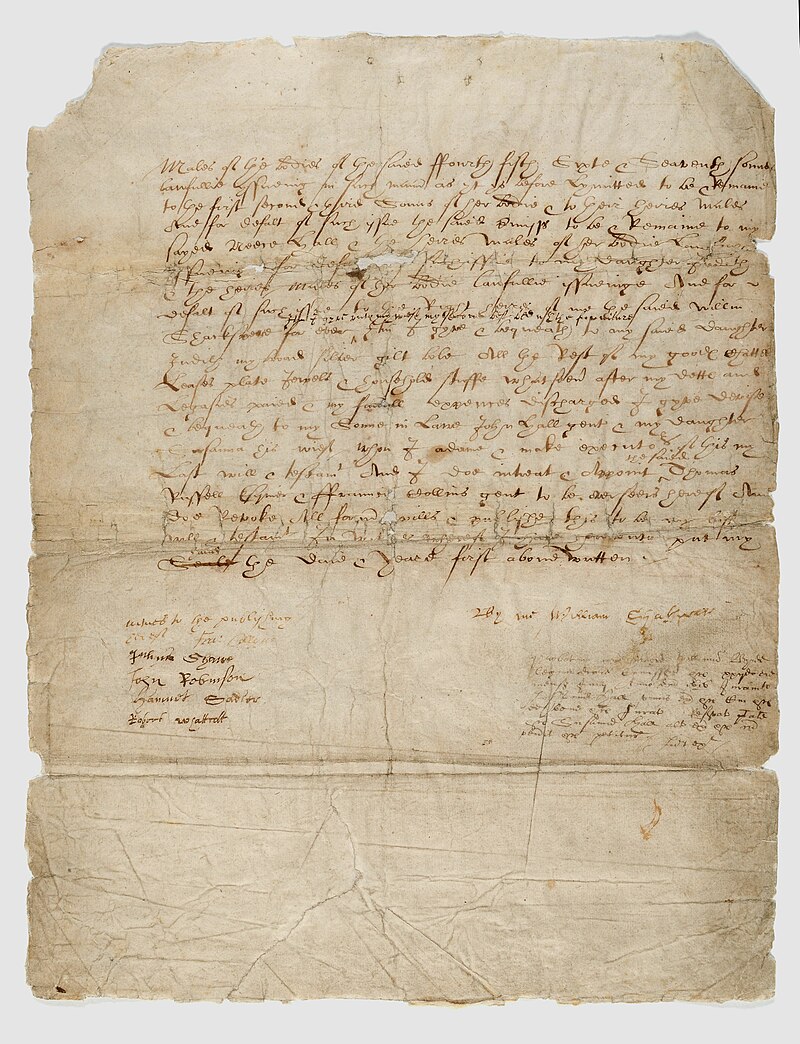
Shakespeare's Final Will and Testament: Insights into the Playwright's Family and Legacy
United KIngdom
Literature
4 min read
Updated By: History Editorial Network (HEN)
Published:
Updated:
William Shakespeare, the eminent playwright and poet, finalized his last will and testament towards the end of his life. The signing took place in Stratford-upon-Avon and marked a crucial moment in the closing chapter of his personal and professional journey.
At the time, Shakespeare was dealing with health issues, which likely influenced his decision to ensure his affairs were in order. His will detailed several bequests, most notably to his family members. He left his estate to his elder daughter, Susanna Hall, and her husband John Hall. His second-best bed was bequeathed to his wife, Anne Hathaway, which has been the subject of much scholarly debate regarding its implications.
Shakespeare's will also included provisions for his other daughter, Judith Quiney, with particular attention to protecting her financial interests through a trust. Notably, he allocated £300 to Judith, positioning her to benefit significantly despite any potential claims by her husband, Thomas Quiney.
The document itself is 3 pages long and was witnessed by trusted associates. These witnesses included Francis Collins, one of the most prominent lawyers in Stratford, which suggested that Shakespeare made considerable efforts to ensure the legality and enforceability of his wishes.
The signing of Shakespeare's will provides valuable insights into the end-of-life customs and legal processes of the era, as well as an understanding of the playwright's family dynamics and personal relationships. Moreover, the legacy bequeathed by Shakespeare influenced the distribution of his wealth and possessions, shaping the economic and social status of his descendants.
#MoofLife #WilliamShakespeare #HistoricalNarrative #EndOfLife #LegalHistory #LiteraryLegacy
Primary Reference
William Shakespeare's last will and testament: original copy ...
Explore the Life Moments of
 AI Twin