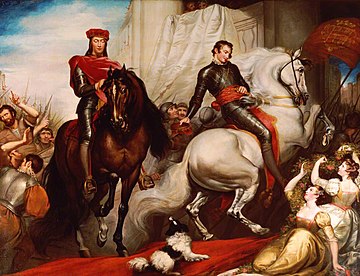
Innovative verse play "Richard II" explores power and rebellion in 1595 English monarchy.
United KIngdom
Literature
4 min read
Updated By: History Editorial Network (HEN)
Published:
Updated:
In the period surrounding 1595, William Shakespeare composed "Richard II," a historical play distinguished by its verse. This work was part of Shakespeare’s broader contribution to the genre of history plays that examined the English monarchy. "Richard II" addresses the complex themes of power, kingship, and rebellion, focusing on the last two years of Richard II’s reign and his eventual overthrow by Henry Bolingbroke.
The play employs a heightened use of lyrical poetry which enhances its dramatic and emotional impact, setting it apart from other historical narratives of the time. The extensive use of verse showcased Shakespeare's mastery of the English language and his innovative approach to dramatic structure. "Richard II" is also noted for its introspective monologues, particularly those of King Richard, exploring themes of identity and mortality.
The historical accuracy of Shakespeare’s "Richard II" is a blend of factual events and creative liberties. While the play portrays significant moments like the deposition of Richard II, it reflects Elizabethan concerns about the nature of power and governance. The deposition scene, which some interpret as critical of usurpation, echoed the anxieties of the era's political climate.
The impact of "Richard II" was considerable, contributing to the ongoing discussions of regal authority and legitimacy during the late Elizabethan period. It influenced both contemporary and subsequent literary works, and its performances have been noted for stirring public and political sentiments. The play remains a staple in Shakespearean studies and theatrical repertoires worldwide.
#WilliamShakespeare #TheatreHistory #RichardII #Monarchy #EnglishLiterature #VerseDrama #MoofLife
Primary Reference
Chronology of Shakespeare's plays - Wikipedia

Explore the Life Moments of
 AI Twin