Use of catapult in Roman era
3 min read
Updated By: History Editorial Network (HEN)
Published:
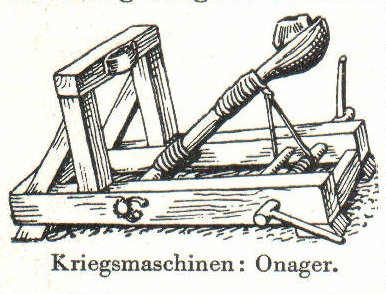
The catapult, particularly the Roman version known as the onager, played a crucial role in ancient siege warfare. Designed to launch large projectiles—such as stones, firepots, or even diseased carcasses—over the high walls of enemy fortifications, these weapons were both destructive and psychologically intimidating. The onager, named after the wild ass for its powerful "kick," used a twisted rope torsion system to store energy, which was then released to hurl its payload across significant distances. Its ability to batter walls and spread chaos made it a staple in Roman military campaigns.
Beyond its brute force, the catapult symbolized the strategic ingenuity of ancient armies. It allowed attackers to breach seemingly impenetrable defenses and gave them a terrifying advantage during prolonged sieges. The use of such artillery required not only craftsmanship in construction but also strategic placement and timing on the battlefield. Over time, the design and effectiveness of these siege engines influenced later medieval weaponry and laid the groundwork for modern artillery systems. The catapult remains a powerful emblem of the technological advancements that shaped ancient military history.
\#MomentsOfLife #MoofLife\_Moment #MoofLife #RomanWarfare #SiegeWeapons #Catapult #Onager #AncientEngineering

Explore the Life Moments of
 AI Twin