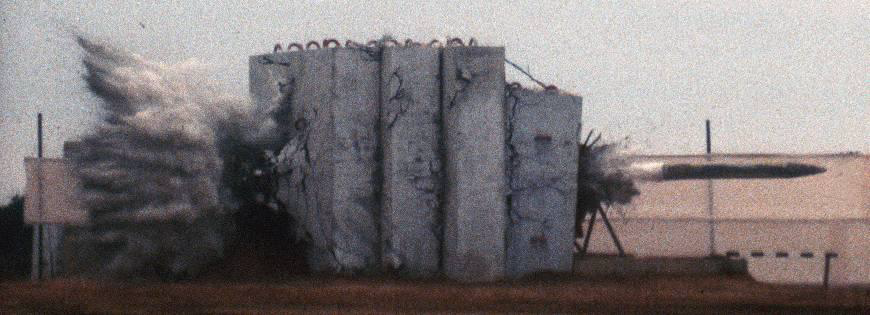
Devlopment of bunker buster bomb
3 min read
Updated By: History Editorial Network (HEN)
Published:
A bunker buster bomb is a precision-guided weapon designed to penetrate fortified underground targets such as enemy bunkers, weapons depots, or command centers before detonating. These bombs feature hardened casings and delayed fuzes, allowing them to break through several meters of reinforced concrete or rock before exploding internally to cause maximum structural damage. The concept traces back to World War II with the British “earthquake bombs” like the Tallboy and Grand Slam, but modern development accelerated in the 1990s with the introduction of bombs like the **GBU-28**, first used during the **1991 Gulf War**, and later the **Massive Ordnance Penetrator (MOP)**, capable of destroying deeply buried facilities.
Bunker busters have since become essential tools for neutralizing hardened enemy positions that conventional bombs cannot reach. They are typically deployed from high-altitude aircraft and guided via **GPS or laser targeting systems** for maximum accuracy. **Recently, bunker buster bombs were reportedly used by the United States during strikes in the Iran-Israel conflict**, targeting underground facilities suspected of storing advanced weaponry or serving as command centers. This underlines their continued relevance in modern warfare, especially in conflicts involving **underground infrastructure and asymmetric threats**.

Explore the Life Moments of
 AI Twin