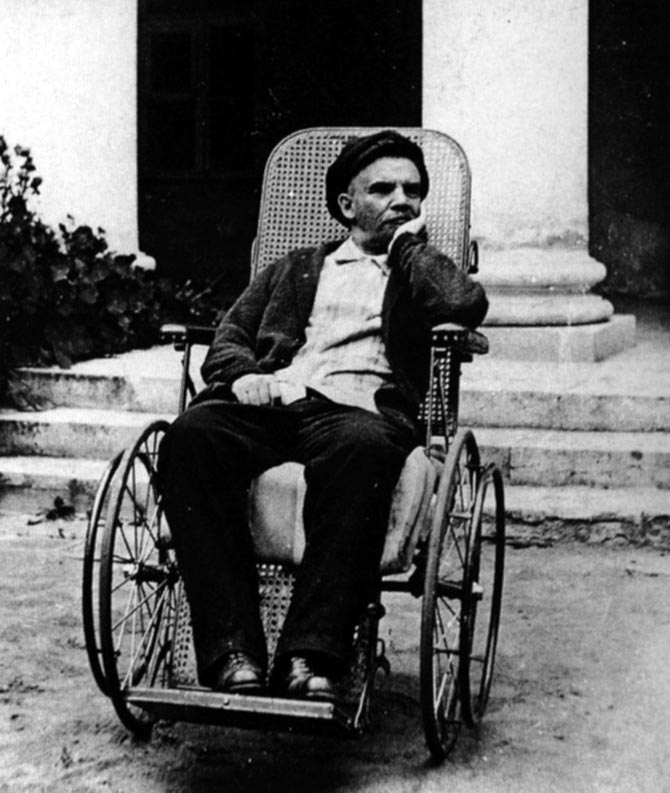
experienced a significant decline in health during the final years of his life
Russia
3 min read
Updated By: History Editorial Network (HEN)
Published:
Vladimir Lenin, the founding father of the Soviet Union and a key architect of the Bolshevik Revolution, experienced a significant decline in health during the final years of his life, primarily due to a series of strokes. His first major stroke occurred in May 1922, which left him partially paralyzed and affected his ability to speak. Despite his condition, Lenin continued to exert influence over the direction of the Soviet state, dictating notes and maintaining correspondence with party officials. However, the strokes were a sign of the toll years of revolutionary activity and the stress of leadership had taken on his body.
Lenin suffered two more strokes, one in December 1922 and another in March 1923, which further debilitated him, eventually leaving him mute and bedridden. These strokes not only marked the beginning of the end for Lenin but also opened the door for internal power struggles within the Communist Party, eventually leading to Joseph Stalin's rise. Lenin’s deteriorating health became a pivotal moment in Soviet history, as it signaled the end of an era and foreshadowed the intense political transformations that would follow.
\#MomentsOfLife #MoofLife\_Moment #MoofLife #HistoryUnfolded #SovietLegacy #Lenin #TurningPointsInHistory
Primary Reference
Vladimir_Lenin

Explore the Life Moments of
 AI Twin