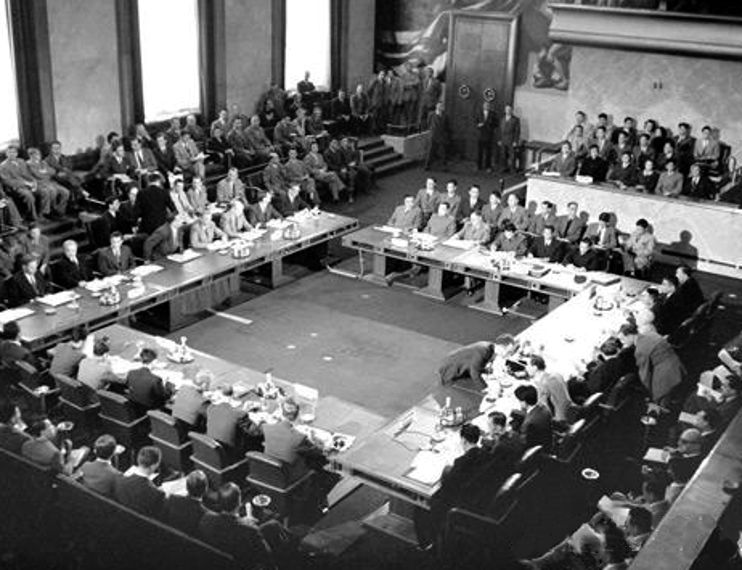
Geneva Accords end First Indochina War
Vietnam

Political
4 min read
Updated By: History Editorial Network (HEN)
Published:
In the mid-20th century, the Geneva Accords brought an end to the First Indochina War, a conflict that had raged on for years in Vietnam. The signing of this agreement marked a significant moment in the history of the region, as it aimed to establish peace between the warring parties.
The background of the Geneva Accords can be traced back to the French colonial rule over Indochina and the subsequent struggle for independence by the Vietnamese people, led by the Viet Minh forces under Ho Chi Minh. The conflict intensified over the years, drawing in international actors like the United States and the Soviet Union.
As the war dragged on, negotiations took place in Geneva, Switzerland, involving France, the Viet Minh, and other concerned parties. The resulting Geneva Accords outlined a ceasefire agreement and the division of Vietnam along the 17th parallel, with the North governed by the communists and the South under a more pro-Western government.
The impact of the Geneva Accords was profound, as it temporarily halted the bloodshed in Vietnam. However, the division of the country sowed the seeds for the Vietnam War that would follow, as the North and South became embroiled in a new struggle for control.
The signing of the Geneva Accords reflected a complex geopolitical landscape and the challenges of decolonization in the post-World War II era. It set the stage for further conflict in Vietnam, ultimately leading to the involvement of the United States and a prolonged and devastating war.
#GenevaAccords #VietnamWar #Decolonization #Geopolitics.

Explore the Life Moments of
 AI Twin