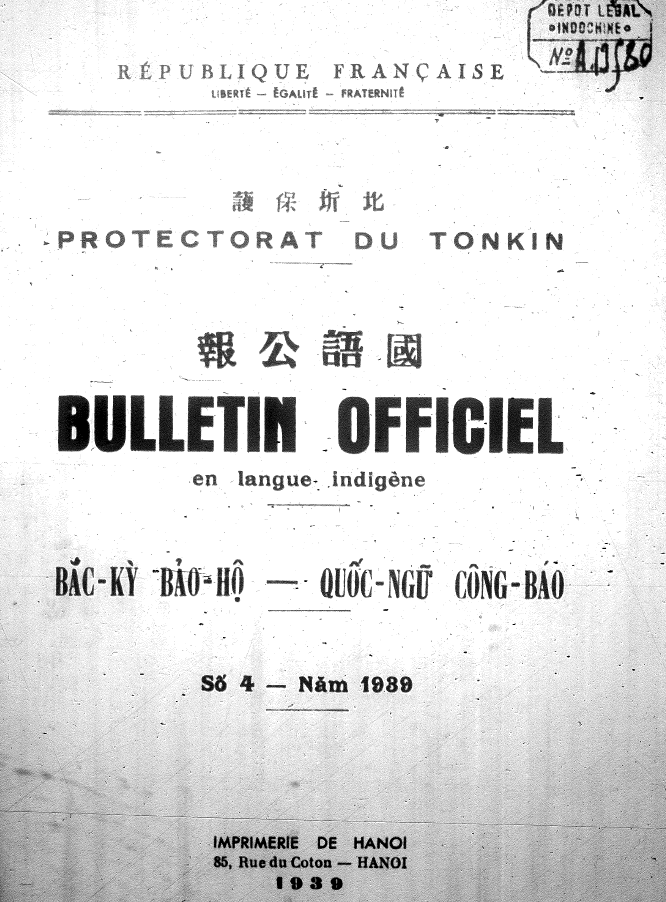
French Protectorate Over Tonkin: A Historical Overview
Vietnam

Political
4 min read
Updated By: History Editorial Network (HEN)
Published:
During the late 19th century, France began to expand its colonial empire in Southeast Asia. Seeking to establish influence and control in the region, the French turned their attention to Tonkin, in what is now northern Vietnam. Tonkin was a wealthy and strategic area known for its resources and advantageous port cities.
France's interest in Tonkin was met with resistance from the ruling Vietnamese Nguyen Dynasty. Tensions escalated, leading to the iconic Battle of Hanoi in which the French claimed a decisive victory. Following this battle, the Nguyen Dynasty was forced to cede control of Tonkin to the French, effectively establishing a French protectorate over the region.
The establishment of the French protectorate over Tonkin had a profound impact on the region. French colonial rule brought significant changes to the socioeconomic and political landscape of northern Vietnam. The French imposed their cultural, administrative, and legal systems on the local population, leading to widespread cultural assimilation and disruption of traditional Vietnamese society.
The incorporation of Tonkin into the French colonial empire also laid the groundwork for further French expansion in Indochina, eventually leading to the formation of French Indochina. This had far-reaching consequences for the entire region, shaping the course of Vietnamese history for decades to come.
Despite initial resistance from the Vietnamese people, the French protectorate over Tonkin remained in place for several decades until Vietnam's independence movement gained momentum in the mid-20th century. The legacy of French colonial rule in Tonkin continues to influence modern-day Vietnam, with lingering cultural, economic, and political ramifications.
#FrenchColonialism #VietnameseHistory #ColonialImpact

Explore the Life Moments of
 AI Twin