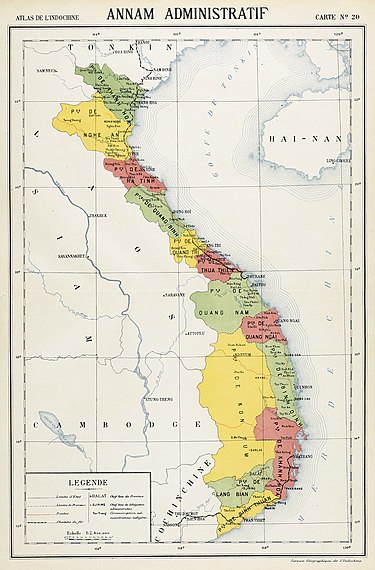
Establishment of French Protectorate over Annam through Treaty of Huế.
Vietnam
Political
4 min read
Updated By: History Editorial Network (HEN)
Published:
In April 14, 1884, the Treaty of Huế was signed, leading to the establishment of a French protectorate over Annam, known as Central Vietnam. This treaty marked a significant turning point in Vietnam's history, as it solidified French colonial control over the region.
Background:
The French had been expanding their influence in Southeast Asia for decades, aiming to establish a colonial empire. Annam, situated strategically between French Indochina and China, was a coveted territory due to its resources and geopolitical importance. In the 1850s, the French began exerting pressure on the Vietnamese government to accept their protection, ultimately culminating in the Treaty of Huế in 1884.
Impact:
The signing of the Treaty of Huế had far-reaching consequences for Vietnam. It marked the beginning of French colonial rule in Central Vietnam, leading to the imposition of French economic, political, and cultural dominance over the region. The Vietnamese monarchy was weakened, and Vietnamese sovereignty was significantly compromised. The treaty also paved the way for further French expansion in Vietnam, ultimately resulting in the colonization of the entire country.
Relevant facts:
- The Treaty of Huế was signed between the French representative Paul Bert and the Vietnamese government, represented by Emperor Đồng Khánh.
- The treaty granted France control over Annam's foreign affairs and allowed for the establishment of French military bases in the region.
- Resistance against French colonial rule in Vietnam intensified following the signing of the treaty, eventually leading to the First and Second Indochina Wars.
#TreatyofHuế #FrenchProtectorate #Colonialism #VietnamHistory

Explore the Life Moments of
 AI Twin