ARVN's Major Ground Operation in Vietnam
Vietnam
Military
Vietnam War
4 min read
Updated By: History Editorial Network (HEN)
Published:
Updated:
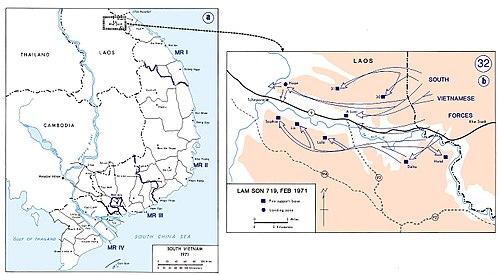
Operation Lam Son 719 marked a pivotal moment in the Vietnam War, representing the first major ground operation conducted by the Army of the Republic of Vietnam (ARVN) aimed at disrupting the Ho Chi Minh Trail. This operation was part of a broader strategy to test the Vietnamization program, which sought to transfer combat responsibilities from American forces to South Vietnamese troops. Initially, the operation showed promise, with ARVN units achieving early successes. However, as the operation progressed, they encountered fierce resistance from the People's Army of Vietnam (PAVN), which was field-testing its combined arms capabilities for the first time. The ARVN's momentum faltered, and the South Vietnamese forces faced significant challenges as they advanced into enemy territory. President Thiệu's decision to halt the general advance allowed PAVN armored divisions to encircle ARVN troops, leading to a critical turning point in the operation.
As the situation deteriorated, Thiệu ordered air assault troops to capture the strategic Tchepone crossroad and subsequently withdraw. This decision came despite the ARVN being outnumbered by a factor of four. The withdrawal turned chaotic as PAVN forces launched a counterattack, resulting in a panicked rout of ARVN troops. The operation ended with substantial losses for the ARVN, with half of their forces either captured or killed, and significant losses in air support, as many helicopters were downed. Although the operation was later portrayed as an 'operational success' by Nixon and Thiệu, it ultimately exposed critical operational deficiencies within the ARVN and raised questions about the effectiveness of the Vietnamization strategy.
#mooflife
#MomentOfLife
#VietnamWar
#Arvn
#OperationLamSon719
#HoChiMinhTrail
#Vietnamization

Explore the Life Moments of
 AI Twin