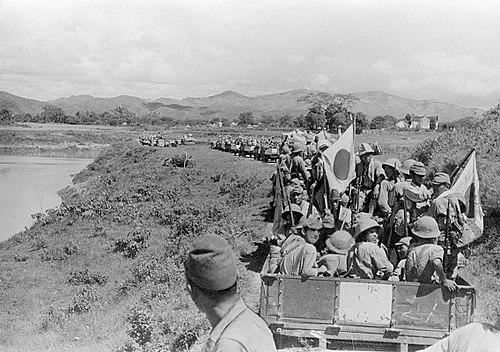
Japan's Invasion of French Indochina
Vietnam
Military
World War II
4 min read
Updated By: History Editorial Network (HEN)
Published:
Updated:
Japan's invasion of French Indochina marked a pivotal moment in the region's history, occurring in the context of World War II. Following France's capitulation to Germany, Japan sought to expand its influence in Southeast Asia. The invasion was part of Japan's broader strategy to secure resources and establish a greater East Asia co-prosperity sphere. The occupation led to the suppression of French colonial authority, which had governed the region for decades. This shift in power dynamics created a vacuum that allowed for the rise of local nationalist movements. Among these was the Viet Minh, founded by Ho Chi Minh, who returned to Vietnam with the aim of resisting Japanese occupation and ultimately seeking independence from colonial rule. The Viet Minh's formation was a direct response to the changing political landscape and the desire for self-determination among the Vietnamese people.
The impact of Japan's invasion was profound, as it not only altered the colonial structure in Indochina but also set the stage for future conflicts in the region. The Japanese occupation disrupted local economies and led to significant hardships for the population, including food shortages and forced labor. The resistance movements, particularly the Viet Minh, gained momentum during this period, laying the groundwork for Vietnam's struggle for independence after the war. The invasion also had broader implications for regional geopolitics, as it drew the attention of the United States and other powers, ultimately contributing to the complex dynamics of the post-war era in Southeast Asia. The legacy of this invasion continues to influence Vietnam's political landscape and its relations with former colonial powers.
#mooflife
#MomentOfLife
#Japan
#FrenchIndochina
#WorldWarIi
#VietMinh
#Colonialism

Explore the Life Moments of
 AI Twin