North American Video Game Crash
Video Game Industry
Market Trends
Historical Events
3 min read
Updated By: History Editorial Network (HEN)
Published:
Updated:
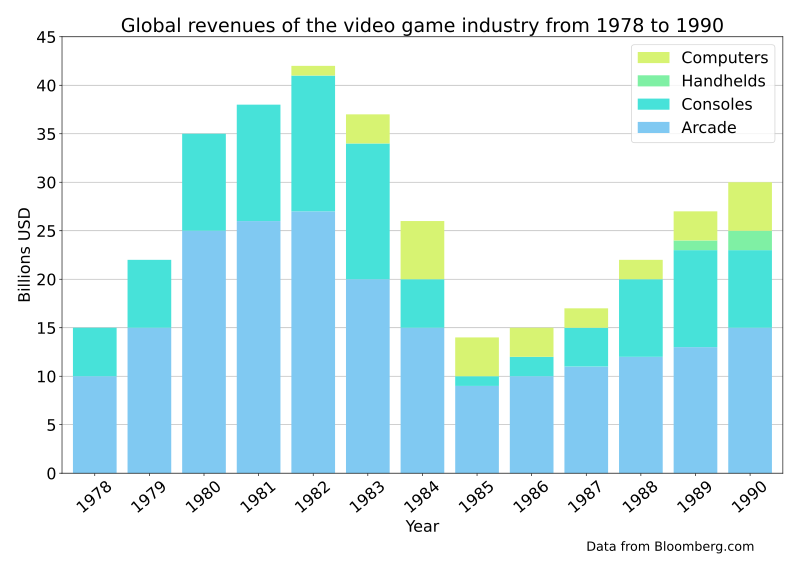
The North American video game crash was a pivotal event in the gaming industry, primarily driven by a combination of factors that led to a significant decline in market value. By the end of 1983, the market was saturated with low-quality games, which diminished consumer trust and interest. The leading company, Atari, faced backlash due to the poor performance of several high-profile titles, further eroding consumer confidence. Additionally, the rise of home computers as a viable gaming platform offered consumers more advanced options at comparable prices to traditional video game consoles. This shift in consumer preference contributed to a drastic downturn in the industry, resulting in the bankruptcy of numerous companies involved in the production of consoles and games between late 1983 and early 1984. The U.S. video game market, which had been valued at $3 billion, plummeted to just $100 million by 1985. Similarly, the global video game market, estimated at $42 billion in 1982, fell to $14 billion by 1985. The repercussions of this crash were profound, leading Warner Communications to sell Atari to Jack Tramiel and prompting other companies like Magnavox and Coleco to exit the industry altogether.
#mooflife
#MomentOfLife
#VideoGameCrash
#Atari
#GamingIndustry
#MarketDecline
#HomeComputers

Explore the Life Moments of
 AI Twin