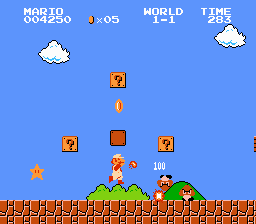
Debut of Super Mario Bros.
Video Games
Entertainment
Franchises
4 min read
Updated By: History Editorial Network (HEN)
Published:
Updated:
The debut of Super Mario Bros. marked a pivotal moment in the video game industry, establishing Mario as the official mascot for Nintendo and launching the highly successful Super Mario franchise. This game introduced players to a side-scrolling platformer format that was innovative for its time, featuring engaging gameplay mechanics and a vibrant world filled with various challenges. The game was designed to appeal to a wide audience, combining simple controls with increasingly complex levels that required skill and strategy. As a result, Super Mario Bros. not only attracted a large player base but also set a new standard for video game design and storytelling. The game's success contributed significantly to the revival of the video game market, which had experienced a downturn prior to its release. It sold over 40 million copies worldwide, making it one of the best-selling video games of all time and solidifying its place in gaming history.
The impact of Super Mario Bros. extended beyond its commercial success; it influenced the development of future video games and the gaming industry as a whole. The character of Mario became a cultural icon, leading to numerous sequels, spin-offs, and merchandise that further expanded the franchise. The game's design elements, such as power-ups, hidden areas, and boss battles, became staples in platform gaming. Additionally, the introduction of memorable characters and a cohesive universe helped to establish narrative-driven gameplay in the industry. The legacy of Super Mario Bros. is evident in the continued popularity of the franchise, which has evolved with technology while maintaining the core gameplay that made it a classic. Today, Mario remains a central figure in gaming, representing not only Nintendo but also the broader evolution of video games as a form of entertainment.
#mooflife
#MomentOfLife
#SuperMarioBros
#Nintendo
#VideoGameHistory
#GamingIndustry
#MarioFranchise

Explore the Life Moments of
 AI Twin