Victor Hugo's Only Opera Libretto Explored
France
Opera
Literature
Victor Hugo
4 min read
Updated By: History Editorial Network (HEN)
Published:
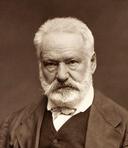
Victor Hugo, a prominent French writer known for his novels and plays, ventured into the realm of opera with 'La Esmeralda,' which stands as his only libretto. Written in 1836, this work was inspired by his earlier novel 'The Hunchback of Notre-Dame.' The opera reflects Hugo's deep engagement with themes of love, sacrifice, and social injustice, which are prevalent in his literary works. 'La Esmeralda' tells the story of Esmeralda, a beautiful Romani girl, and her tragic love for Quasimodo, the deformed bell-ringer of Notre-Dame. The narrative intertwines the lives of various characters, showcasing the struggles of the marginalized in society, a recurring motif in Hugo's oeuvre. The libretto's creation marked a significant expansion of Hugo's artistic expression, allowing him to explore musical storytelling alongside his established literary pursuits.
The impact of 'La Esmeralda' extends beyond its initial performance, as it contributed to the evolution of French opera. Although the opera itself did not achieve the same level of acclaim as Hugo's novels, it remains a notable example of his ability to adapt his storytelling to different artistic forms. The ending of the opera was altered for the stage adaptation, which reflects the collaborative nature of opera production and the necessity of adapting narratives for musical interpretation. This work has been revisited in various adaptations, highlighting its enduring relevance in discussions of Hugo's contributions to literature and the arts. 'La Esmeralda' serves as a testament to Hugo's versatility and his commitment to addressing social issues through diverse mediums.
#mooflife
#MomentOfLife
#VictorHugo
#LaEsmeralda
#OperaLibretto
#FrenchLiterature
#HunchbackOfNotre-dame
Explore the Life Moments of
 AI Twin