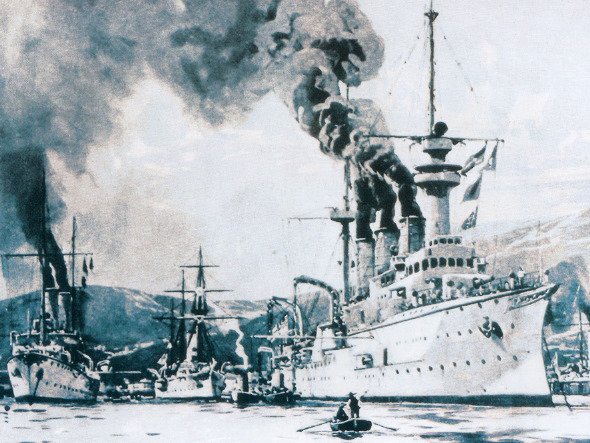
Ultimatum: Britain and Germany demand payment from President Castro
Venezuela
Political
International Relations
4 min read
Updated By: History Editorial Network (HEN)
Published:
In 1902, Britain and Germany jointly issued an ultimatum to Venezuela, demanding that President Cipriano Castro settle outstanding financial claims for damages incurred by their nationals. Castro had previously halted payments on foreign debts, leading to tensions with several European powers. The ultimatum threatened naval action if the demands were not met.
The background to this event stemmed from Venezuela's mounting debt and financial instability, which prompted Castro to suspend payments to foreign creditors. This decision led to a diplomatic crisis with European countries, particularly Britain and Germany, whose citizens held substantial investments in Venezuelan infrastructure and resources.
The ultimatum sent shockwaves through Venezuela, as the threat of naval intervention raised fears of potential military conflict. Castro initially resisted the demands, but faced with the possibility of armed intervention, eventually agreed to arbitration. The case was referred to an international tribunal in Paris, where a compromise was reached, and Venezuela agreed to pay compensation to Britain and Germany.
The impact of this event was significant as it highlighted the vulnerability of smaller nations to pressure from more powerful states. It also underscored the importance of diplomacy and international arbitration in resolving disputes between countries. The resolution of the crisis helped restore stability to Venezuela and improve its standing in the international community.
#Venezuela #Diplomacy #InternationalRelations #FinancialCrisis #Arbitration #EuropeanPowers
Explore the Life Moments of
 AI Twin