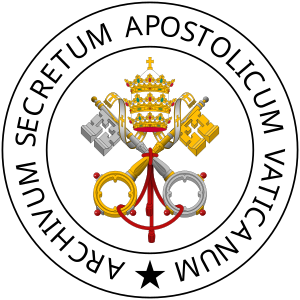
Establishment of the Vatican Secret Archives by Pope Paul V.
Vatican City

10 min read
Updated By: History Editorial Network (HEN)
Published:
In 1612, Pope Paul V established the Vatican Secret Archives (Latin: Archivum Secretum Vaticanum), which served as a central repository for the Catholic Church's most important and confidential documents. The creation of this archive was a crucial step in organizing and preserving the extensive records of the papacy, ensuring that key documents related to the Church’s governance, diplomacy, and internal affairs were securely stored and managed.
Background: The Need for a Centralized Archive
Prior to the establishment of the Vatican Secret Archives, the Catholic Church's documents were dispersed across various locations, including different offices within the Vatican and other church institutions throughout Europe. This lack of centralization made it challenging to maintain, access, and protect these vital records, especially those that were crucial for the administration of the Papal States and the broader Catholic Church.
Pope Paul V, born Camillo Borghese, recognized the necessity of consolidating these documents into a single, secure location. His decision to create the Vatican Secret Archives was driven by the need to safeguard the Church’s records, improve their organization, and ensure that they were readily available to the papacy for governance and decision-making.
Establishment of the Vatican Secret Archives
In 1612, Pope Paul V officially founded the Vatican Secret Archives within Vatican City. The term "secret" in the name did not imply secrecy in the modern sense but rather indicated that the archives were the personal property of the pope, meant to be used for the administration of the Church. The archive was housed in the Apostolic Palace, close to the pope's private quarters, reflecting its importance and the need for confidentiality.
The Vatican Secret Archives was meticulously organized to preserve a wide range of documents, including papal bulls, letters, state papers, diplomatic correspondence, and records of Church councils. The archive was intended to serve as both a historical repository and a practical tool for the governance of the Church.
Contents of the Vatican Secret Archives
Over the centuries, the Vatican Secret Archives grew to become one of the most significant collections of historical documents in the world. It houses an extensive array of records covering more than 12 centuries of Church history, from the early Middle Ages to the present day.
Some of the key types of documents found in the Vatican Secret Archives include:
Papal Bulls and Encyclicals: Official decrees and letters issued by the popes, addressing matters of doctrine, governance, and relations with secular powers.
Diplomatic Correspondence: Letters and reports exchanged between the Vatican and various kingdoms, empires, and states, providing insight into the Church's role in global politics and diplomacy.
Council Records: Documents from major Church councils, such as the Council of Trent (1545–1563), which played a critical role in the Counter-Reformation and the shaping of Catholic doctrine.
Inquisition Files: Records related to the activities of the Roman Inquisition and other Church tribunals, dealing with issues of heresy, doctrinal disputes, and religious discipline.
Missionary Reports: Documents detailing the activities of Catholic missionaries around the world, offering valuable perspectives on the spread of Christianity and the Church's interactions with different cultures.
Access and Public Perception
For many centuries, the Vatican Secret Archives were accessible only to the pope and a select group of Vatican officials. The archive's name and its restricted access fueled speculation and intrigue, leading to various myths and conspiracy theories about its contents. In reality, the archive was primarily a working tool of the papacy, containing both sensitive and routine documents necessary for the administration of the Church.
In 1881, Pope Leo XIII opened the Vatican Secret Archives to scholars, allowing academic research into its vast collections. This decision marked a significant shift, transforming the archive from a closely guarded resource into a critical center for historical research. Since then, historians and researchers have used the archives to study a wide range of topics, from medieval papal diplomacy to the Church's role in modern history.
Modern Developments: Renaming the Archive
In 2019, Pope Francis renamed the Vatican Secret Archives to the Vatican Apostolic Archive (Latin: Archivum Apostolicum Vaticanum). The change was made to avoid the modern connotations of the word "secret," which often implied something hidden or forbidden. The new name more accurately reflects the archive's purpose as a repository of the papacy's historical records, accessible to scholars and researchers.
#MomentsOfLife #MoofLife_Moment #MoofLife #VaticanSecretArchives #VaticanCity #ChurchHistory #PapalHistory #PopePaulV
Primary Reference
With new decree, pope makes Vatican Secret Archives no longer ...
Explore the Life Moments of
 AI Twin