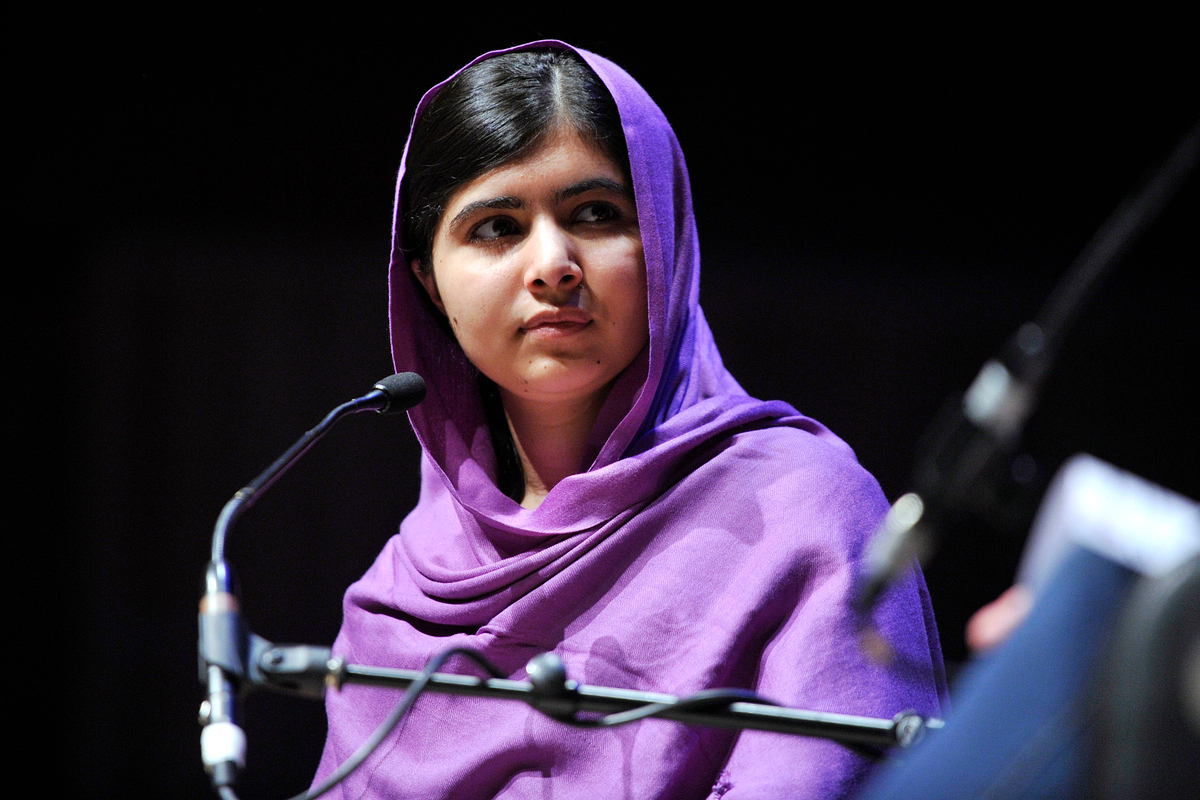
Malala Yousafzai's Call for Universal Education
United States of America
Educational Rights
4 min read
Updated By: History Editorial Network (HEN)
Published:
Malala Yousafzai addressed the United Nations Youth Assembly, emphasizing the need for quality education for every child worldwide. Malala, a Pakistani education activist, survived an attack by the Taliban, who opposed her advocacy for girls' education. During her speech, she called for global leaders to provide free, compulsory education for all children and highlighted the importance of educating girls to achieve social and economic progress.
Malala's advocacy brought international attention to the ongoing struggle for education in many underserved and conflict-affected regions. Her speech reinforced the urgency of addressing educational disparities, citing facts like over 130 million girls worldwide being out of school and millions of children lacking access to quality education due to poverty, conflict, and discriminatory practices.
The impact of Malala's speech was significant, galvanizing international efforts to support educational initiatives. It underscored the connection between education and broader social issues, such as gender equality and economic development. The United Nations and various international organizations continued to focus on educational programs, aiming to bridge the gaps highlighted by Malala.
The event was a defining moment in the global movement for education rights, strengthening commitments to achieving universal education goals. Malala's powerful narrative and evidence-based arguments served as a catalyst for policy changes and increased funding for education in developing countries.
#EducationForAll #GirlsEducation #GlobalEducation #UNYouthAssembly #MoofLife
Explore the Life Moments of
 AI Twin