Khrushchev's UN Speech: Decolonization, Anti-Imperialism, Cold War Diplomacy
United States of America
Political
4 min read
Updated By: History Editorial Network (HEN)
Published:
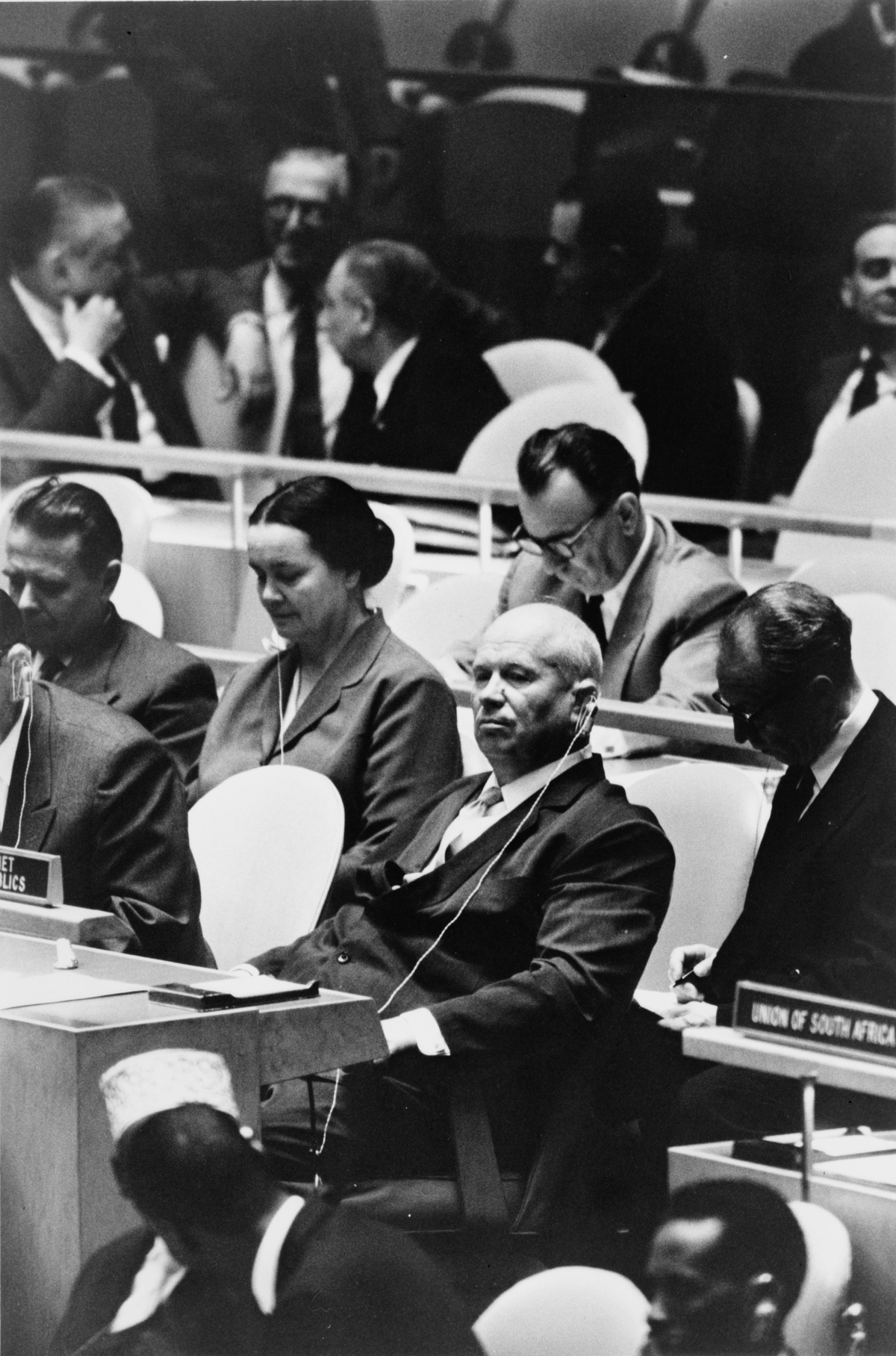
Soviet Premier Nikita Khrushchev addressed the United Nations General Assembly, emphasizing the need for decolonization and condemning Western imperialism. In the context of the Cold War, Khrushchev's speech was a strategic move, aiming to assert Soviet influence and challenge Western powers. He highlighted the struggles of colonized nations and argued for their right to self-determination. At that time, many African and Asian countries were moving towards independence, and Khrushchev's advocacy resonated with leaders of these emerging nations.
Khrushchev's speech had significant political implications. It increased tensions between the United States and the Soviet Union and influenced the non-aligned movement, which sought a middle path between the two superpowers. Within the General Assembly, Khrushchev's arguments gained support from delegations of countries striving for independence. His critique of Western imperialism was seen as a call for solidarity among nations against colonial oppression.
Statistically, the period saw a marked increase in the number of newly independent countries, particularly in Africa. The UN's membership expanded as these nations gained sovereignty and joined the global organization. Khrushchev's address can be seen as both reflective and catalytic of these broader geopolitical trends.
This moment remains a significant example of Cold War diplomacy, contrasting Soviet and Western ideologies, and highlighting the global struggle for independence and self-governance.
#MoofLife #UN #ColdWar #Decolonization #Imperialism #SovietUnion #GlobalPolitics
Explore the Life Moments of
 AI Twin