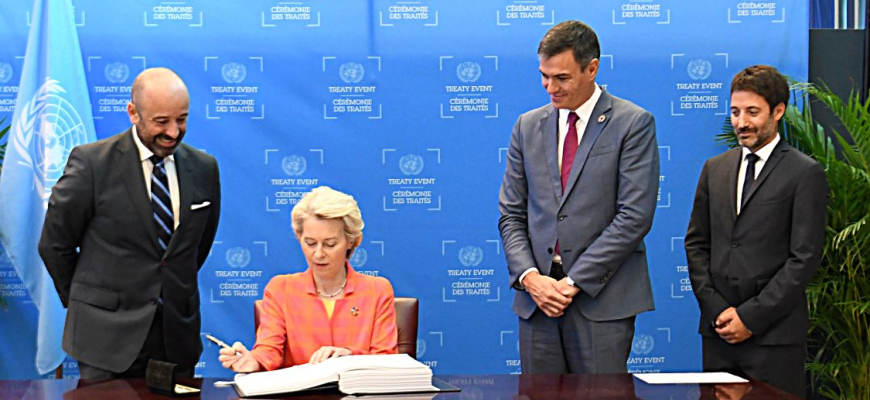
High Seas Treaty (BBNJ Agreement) officially enters into force
United Nations headquarters, New York, United States
Sustainability
4 min read
Updated By: History Editorial Network (HEN)
Published:
On 17 January 2026, the landmark “High Seas Treaty” officially became legally binding for participating countries, marking the first global framework dedicated to conserving and sustainably using marine biodiversity in areas beyond national jurisdiction (the high seas and deep seabed).
What changed (in plain terms)? - The treaty activates new international rules and processes that enable countries to:
• Create large-scale marine protected areas in international waters
• Require environmental impact assessments before potentially harmful activities are approved
• Set up fair benefit-sharing for discoveries and use of marine genetic resources (including related data)
• Strengthen capacity-building and marine technology transfer, supported by shared information mechanisms and future governance meetings (including a first COP within a year of entry into force)
Why this matters?
For the first time, international waters - covering a vast portion of the ocean beyond any single nation’s control - have a dedicated, legally binding conservation toolkit designed to help protect ecosystems, wildlife, and shared ocean resources.
The treaty opened for signature on September 20, 2023, in the margins of the UN General Assembly High-Level Week. While it entered into force on January 17, 2026 - 120 days after reaching the required 60 ratifications - the initial formal signing ceremony and subsequent period for signatures (which lasted until September 20, 2025) were centered at the UN in New York.
#HighSeasTreaty
#BBNJ
Primary Reference
Marine Biodiversity Treaty to Enter into Force in January 2026
Explore the Life Moments of
 AI Twin