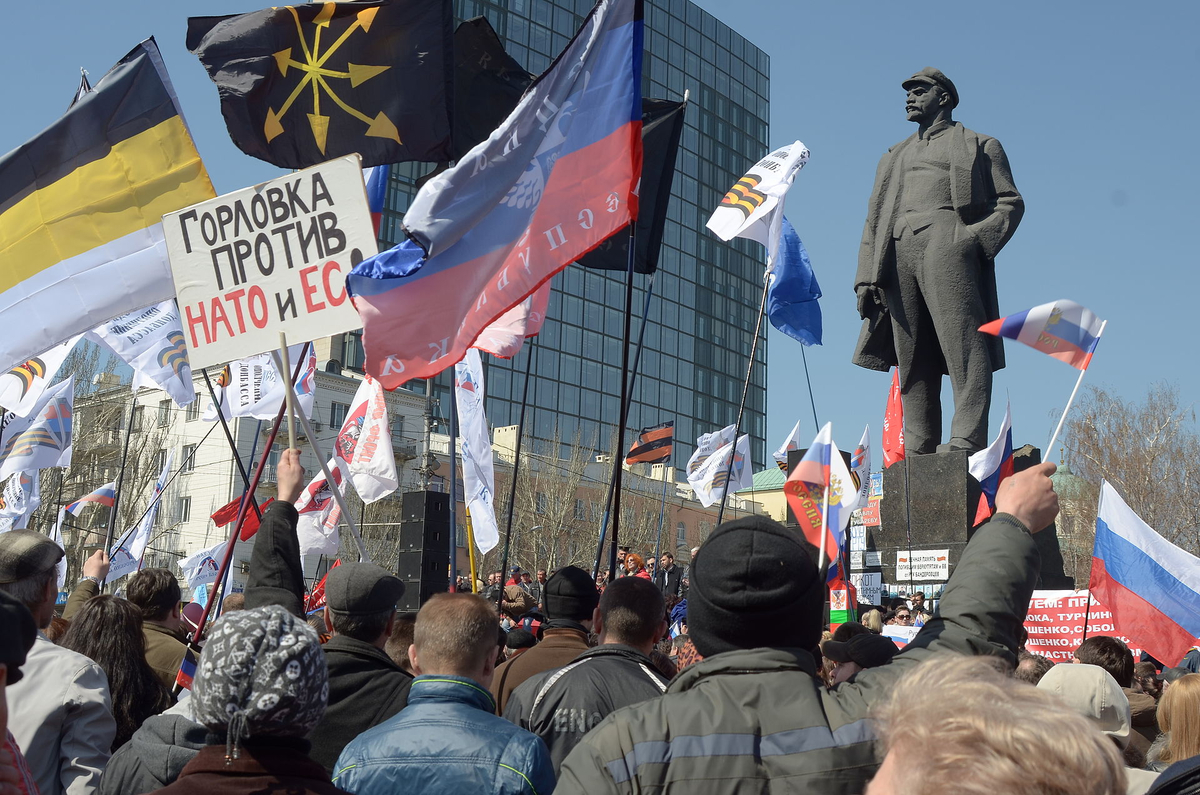
Pro-Russian unrest in Eastern Ukraine
Ukraine
Civil unrest
10 min read
Updated By: History Editorial Network (HEN)
Published:
On February 23, 2014, pro-Russian unrest began to emerge in eastern Ukraine, marking the beginning of a conflict that would escalate into a major geopolitical crisis involving Ukraine, Russia, and the broader international community. This unrest followed the ousting of Ukraine's pro-Russian president, Viktor Yanukovych, amid mass protests in Kyiv and across the country. The unrest in eastern Ukraine laid the groundwork for the annexation of Crimea by Russia and the ongoing conflict in the Donbas region, which continues to shape the political and security landscape of Eastern Europe.
Background: The Euromaidan Protests and Yanukovych’s Ouster
The unrest in eastern Ukraine was deeply connected to the broader political crisis that had engulfed Ukraine since late 2013. The Euromaidan protests, which began in November 2013, were sparked by President Viktor Yanukovych’s decision to reject an association agreement with the European Union in favor of closer ties with Russia. This decision was seen by many Ukrainians, particularly in the western and central parts of the country, as a betrayal of Ukraine’s European aspirations.
The protests quickly grew into a broader movement against corruption, government repression, and Yanukovych’s authoritarian rule. The movement culminated in February 2014, when violent clashes between protesters and security forces in Kyiv led to the deaths of dozens of demonstrators. Facing immense pressure, Yanukovych fled Kyiv on February 21, 2014, and was ultimately ousted by the Ukrainian parliament on February 22.
The Beginning of Pro-Russian Unrest
As Yanukovych fled and a new, pro-European government began to take shape in Kyiv, unrest began to stir in the eastern and southern regions of Ukraine, where a significant portion of the population was ethnically Russian or Russian-speaking. Many in these regions viewed the new government with suspicion, fearing that it would pursue policies unfavorable to their interests, particularly concerning language rights and cultural identity.
On February 23, 2014, protests began to break out in cities across eastern Ukraine, including Donetsk, Kharkiv, and Luhansk. These protests were characterized by pro-Russian sentiment, with demonstrators waving Russian flags and calling for closer ties with Russia. In some cases, there were demands for greater autonomy or even secession from Ukraine.
The unrest was fueled by a combination of factors, including:
Ethnic and Linguistic Divides:
Eastern Ukraine has a large population of ethnic Russians and Russian-speaking Ukrainians, many of whom have historically felt a strong cultural connection to Russia. The new government in Kyiv, which was seen as more nationalistic and pro-Western, was viewed with distrust by many in the east.
Russian Influence:
Russia played a significant role in stoking the unrest, both through its state-controlled media, which portrayed the new Ukrainian government as illegitimate and fascist, and through direct support for pro-Russian groups and militias in the region. Russian propaganda was particularly effective in mobilizing anti-Kyiv sentiment in eastern Ukraine.
Fear of Marginalization:
Many in eastern Ukraine feared that the new government would marginalize Russian language and culture. The repeal of a 2012 law that allowed regions to use Russian as an official language alongside Ukrainian (though this repeal was later vetoed) further inflamed tensions.
Escalation and Russian Annexation of Crimea
The unrest in eastern Ukraine quickly escalated into a broader conflict. In March 2014, following the ouster of Yanukovych, Russian forces, initially without insignias, began seizing control of the Crimean Peninsula. On March 16, 2014, a controversial and internationally unrecognized referendum was held in Crimea, resulting in a declaration of independence from Ukraine and a request to join the Russian Federation. Shortly thereafter, Russia formally annexed Crimea, a move that was widely condemned by the international community.
The Conflict in Donbas
The unrest in eastern Ukraine did not remain limited to protests. By April 2014, pro-Russian separatists, with alleged support from Moscow, began seizing government buildings and declaring "people's republics" in the Donetsk and Luhansk regions, collectively known as the Donbas. These actions marked the beginning of a violent conflict between Ukrainian government forces and the separatists, who sought independence or union with Russia.
The conflict in Donbas escalated into a full-scale war, with significant involvement from Russia, including the provision of weapons, funding, and even Russian troops disguised as local militias. Despite attempts at ceasefires and peace negotiations, including the Minsk agreements, the conflict has continued intermittently, leading to thousands of deaths and displacements.
International Response and Impact
The pro-Russian unrest in eastern Ukraine and the subsequent annexation of Crimea by Russia led to a major international crisis. The United States, European Union, and other Western countries imposed sanctions on Russia in response to its actions in Ukraine, leading to a significant deterioration in relations between Russia and the West. NATO increased its presence in Eastern Europe as a deterrence measure, and the conflict in Ukraine became a focal point of geopolitical tensions.
For Ukraine, the conflict has had profound and lasting consequences. The loss of Crimea and the ongoing war in Donbas have deeply affected the country's economy, politics, and society. The conflict has also galvanized Ukrainian nationalism and shifted the country’s orientation decisively towards the West, with Ukraine pursuing closer ties with the European Union and NATO.
#MomentsOfLife #MoofLife_Moment #MoofLife #Ukraine #EasternUkraine #Donbas #Russia #Geopolitics #Crimea #ProRussianUnrest
Primary Reference
2014 pro-Russian unrest in Ukraine - Wikipedia

Explore the Life Moments of
 AI Twin