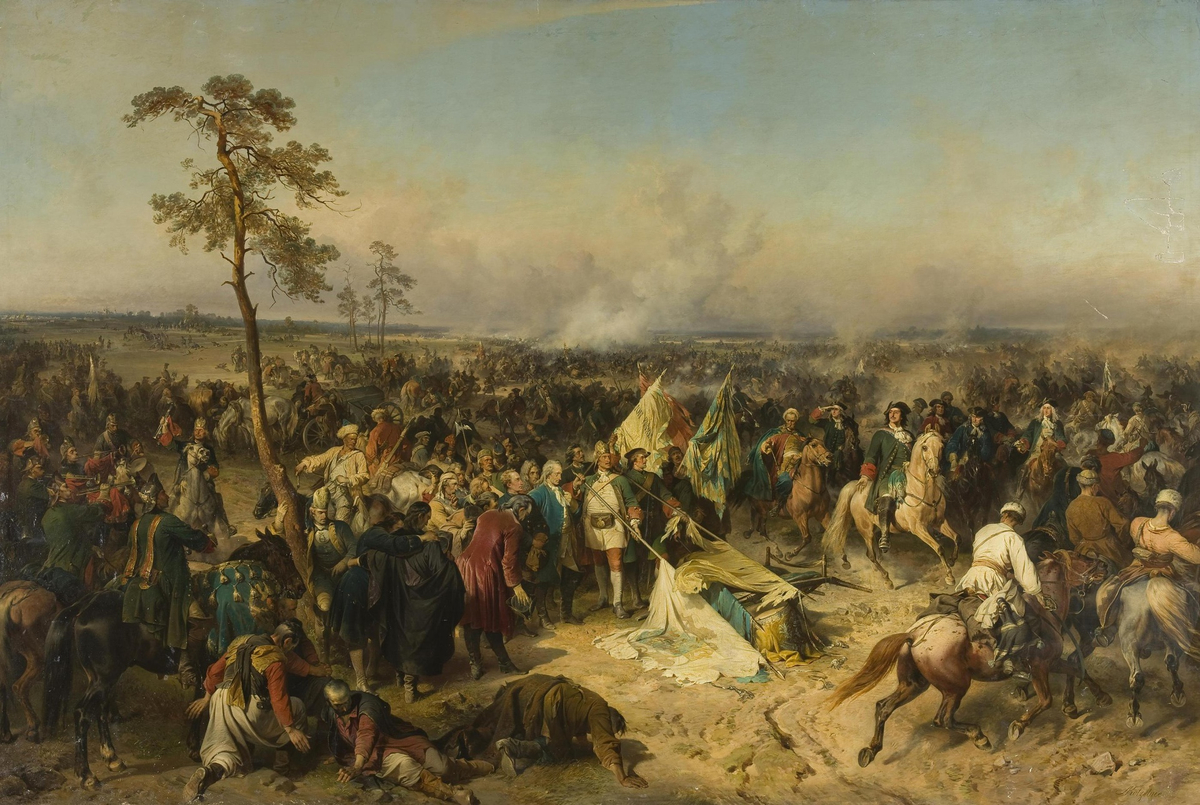
Great Northern War climax: decisive defeat of Swedish forces by Russian army.
Ukraine
Military
5 min read
Updated By: History Editorial Network (HEN)
Published:
The Battle of Poltava was a pivotal conflict in the Great Northern War, fought between the forces of the Tsardom of Russia, led by Tsar Peter the Great, and the Swedish Empire under King Charles XII. The confrontation took place near the fortified Ukrainian city of Poltava, which became a strategic focal point.
Background: The Great Northern War was a European coalition's endeavor to challenge Sweden's dominance in the region. In their campaign, the Swedish army pushed deep into Russian territory, aiming to seize Moscow. However, as winter approached, the Swedish forces found themselves overstretched and inadequately supplied. Tsar Peter, seizing the opportunity, drew them into a decisive engagement near Poltava.
Battle Details: Russian forces, numbering around 45,000, vastly outnumbered the Swedish army, which was reduced to approximately 20,000 due to previous engagements and supply shortages. The Russians, better prepared and fortified, withstood initial Swedish assaults. Peter's army utilized artillery advantageously, which decimated Swedish ranks and ultimately led to the collapse of their main formations. Charles XII, though wounded, led his troops with determination, but his efforts were thwarted.
Impact and Aftermath: The outcome of the Battle of Poltava marked a significant turning point in the Great Northern War. The decisive Russian victory not only halted Swedish expansion but also signaled the rise of Russia as a major European power. King Charles XII escaped but was forced to seek refuge in the Ottoman Empire, effectively ending Swedish preeminence. The battle's aftermath reshaped the geopolitical landscape, diminishing Sweden's influence and paving the way for Russian dominance in Eastern Europe.
Statistics: Russian casualties were estimated to be around 5,000, while the Swedish side suffered over 10,000 losses, including prisoners. This disproportionate casualty rate underscored the impact of strategic planning and numerical superiority in the conflict.
Conclusion: The Battle of Poltava fundamentally shifted the balance of power in Northern Europe, establishing Russia as a formidable force, and curtailing Swedish influence. The engagement demonstrated the critical importance of logistics, planning, and timely strategic decisions in military conflicts.
#BattleOfPoltava #MilitaryStrategy #EuropeanHistory #GreatNorthernWar #MoofLife
Primary Reference
Battle of Poltava - Wikipedia

Explore the Life Moments of
 AI Twin