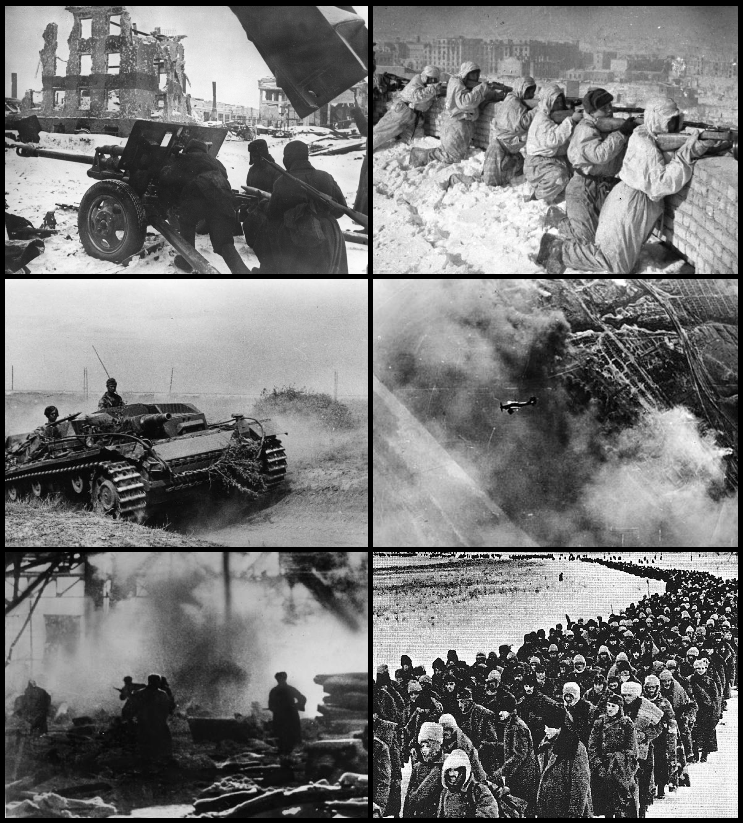
Bloody battle shifts World War II.
Ukraine

Military
5 min read
Updated By: History Editorial Network (HEN)
Published:
The Battle of Stalingrad was a decisive confrontation during World War II between Nazi Germany and its allies and the Soviet Union. The battle took place in the city of Stalingrad, now known as Volgograd, and its surrounding areas. This event was pivotal in the Eastern Front's theatre of war.
Before the battle, Germany, under Adolf Hitler's command, aimed to capture Stalingrad due to its industrial capacity and strategic location. The German offensive, part of Operation Barbarossa, intended to secure the Volga River and cripple Soviet transportation and supply lines.
The German 6th Army, commanded by General Friedrich Paulus, advanced towards Stalingrad. The Soviet Union, led by General Vasily Chuikov of the 62nd Army, mounted a staunch defense. The battle erupted into brutal urban warfare, with both sides fighting for control of individual buildings and streets.
The confrontation saw massive casualties. German forces ultimately suffered approximately 750,000 casualties, including killed, wounded, and missing. Soviet forces also endured heavy losses, with estimates of around 1.1 million casualties. Civilian casualties in Stalingrad numbered over 40,000, partly due to constant bombings and lack of food.
On the strategic front, the Red Army launched Operation Uranus, an encircling maneuver aimed at trapping German forces within Stalingrad. This counter-offensive successfully encircled and trapped approximately 300,000 Axis troops in a pocket around Stalingrad. Despite desperate attempts to break the encirclement, German forces could not retrieve or reinforce their beleaguered 6th Army.
By the end of the battle, the trapped German 6th Army faced dire conditions, including starvation, extreme cold, and dwindling supplies. General Paulus surrendered, marking the first time a German field marshal surrendered to enemy forces. This defeat significantly impacted German morale and military manpower, marking a turning point in the Eastern Front.
The aftermath of the Battle of Stalingrad solidified Soviet resilience and showcased the Red Army's capability to mount successful large-scale operations. It was a critical blow to Nazi Germany's ambitions in Eastern Europe and marked the beginning of a strategic Soviet push westward.
The memory of the Battle of Stalingrad continues to resonate due to its scale, brutality, and pivotal role in World War II's outcome.
#MoofLife #WWII #Stalingrad #EasternFront #SovietVictory
Primary Reference
Battle of Stalingrad - Wikipedia

Explore the Life Moments of
 AI Twin