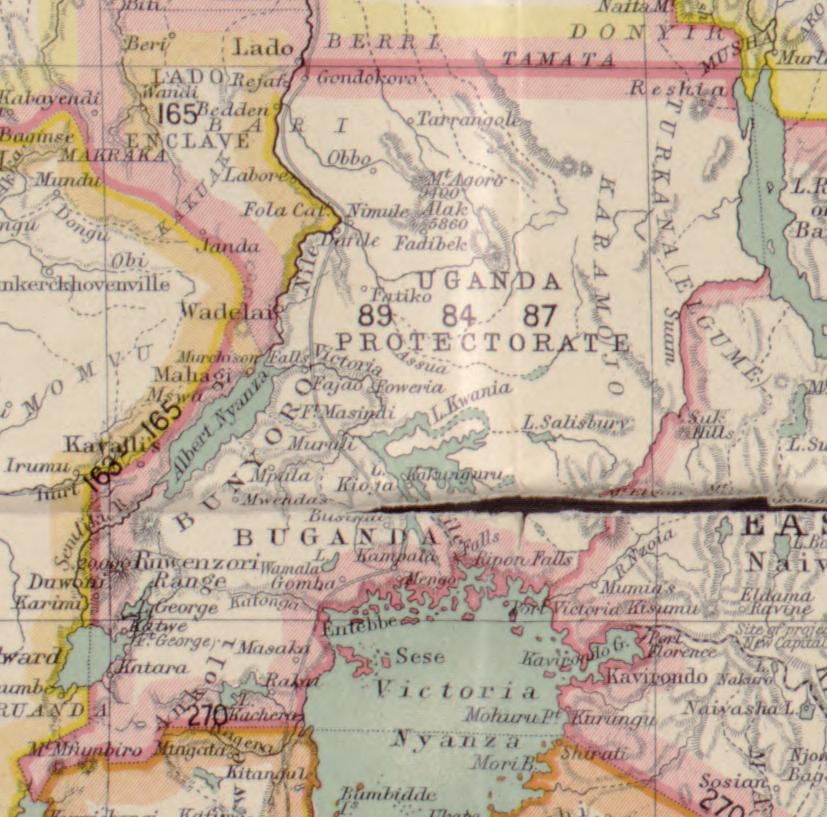
Uganda under British Protection
Uganda

Political
5 min read
Updated By: History Editorial Network (HEN)
Published:
The establishment of the British Protectorate in Uganda marked a significant transformation in the region's governance and socio-economic structure. Before the arrival of British control, Uganda was a mosaic of kingdoms and chiefdoms, with Buganda being one of the most influential. The British, motivated by strategic interests and the desire to control the source of the Nile, progressively increased their influence in the region.
The process began with treaties and alliances with local leaders, such as the Buganda Agreement. These agreements were often skewed in favor of British interests, serving to consolidate their power while reducing the autonomy of local rulers. The agreements also aimed at securing trade routes and curbing the influence of competing colonial powers, particularly Germany.
The imposition of the British Protectorate involved a restructuring of local economies and societies. Traditional agricultural practices were transformed with the introduction of cash crops like cotton and coffee. These changes significantly influenced the local labor market and trade dynamics, integrating the region more deeply into the global economy.
Statistics from this period show a marked increase in the export of agricultural commodities, which was facilitated by the establishment of infrastructure such as railways and roads. However, these developments were accompanied by significant disruptions. The colonial administration instituted new taxes, which were often burdensome for the local populace, leading to resistance and occasional conflicts.
The British protectorate also brought about changes in education and religion. Missionaries played a key role in promoting Western education and Christianity, influencing cultural and social norms. The introduction of Western legal and administrative systems further integrated Uganda into the colonial framework.
The impact of colonial rule remains a deeply complex and contested chapter in Uganda's history. While colonialism facilitated infrastructure development and economic integration, it also led to the erosion of traditional governance structures and cultural practices. Colonial policies laid the groundwork for future socio-political challenges, including ethnic tensions and economic disparities, which Uganda continues to navigate in its post-independence era.
#ColonialHistory #Uganda #BritishProtectorate #MoofLife
Primary Reference
Protectorate of Uganda - Wikipedia

Explore the Life Moments of
 AI Twin