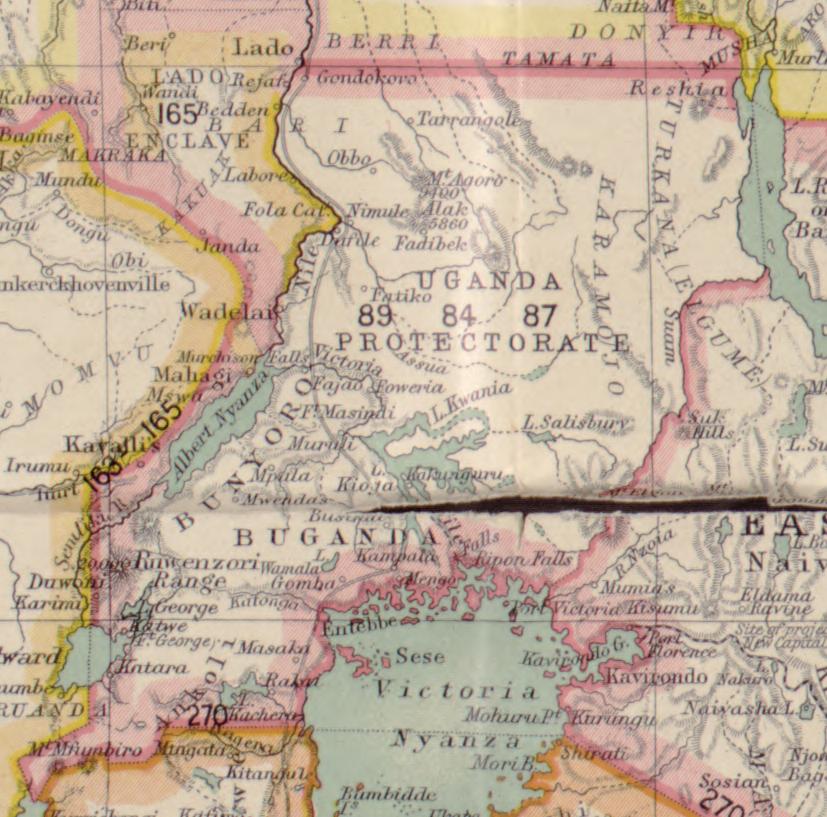
The British Establishment of Protectorate
Uganda

Colonial
6 min read
Updated By: History Editorial Network (HEN)
Published:
The establishment of the Uganda Protectorate by the British was a transformative event in the history of East Africa. The process began with the arrival of British explorers and missionaries, who were initially interested in the region for its strategic location and resources. Over time, political developments and economic interests led to increasing British involvement in the affairs of the Buganda Kingdom, one of the most dominant political entities in the area.
The deeper British involvement was partly driven by the competition with other European powers, notably Germany, for influence in Africa. The Berlin Conference had formalized the scramble for Africa, carving up the continent among European powers. To consolidate control, the British sought alliances with local leaders, eventually signing treaties with the Buganda Kingdom's leaders. These agreements facilitated British influence but were also riddled with misunderstandings and imbalances of power.
With the administrative declaration of the Uganda Protectorate, the British established a formal colonial administration. This brought about significant changes, including the imposition of new tax systems, reorganization of the local governance structure, and introduction of Western legal and education systems. Economically, the British were focused on exploiting resources, which led to the development of infrastructural projects like the Uganda Railway. The railway was instrumental in the movement of goods and served as a backbone for economic integration within the protectorate and with the larger British East Africa region.
The administrative and economic changes had profound impacts on the local population. Traditional authority structures were disrupted, and the local economies shifted, often benefiting the colonial rulers more than the indigenous populations. This restructuring sowed the seeds of various social and political challenges. Resistance movements and uprisings occurred sporadically, reflecting the local dissatisfaction with British rule.
In the long term, the British establishment of the Uganda Protectorate laid the foundation for the modern state of Uganda. It introduced new governance frameworks and economic practices that would shape the region's development. However, it also left a legacy of colonial exploitation and socio-political challenges that the Ugandan people would continue to navigate even after gaining independence.
#ColonialHistory #EastAfrica #UgandaHistory #BritishEmpire #MoofLife
Primary Reference
Protectorate of Uganda - Wikipedia
Explore the Life Moments of
 AI Twin