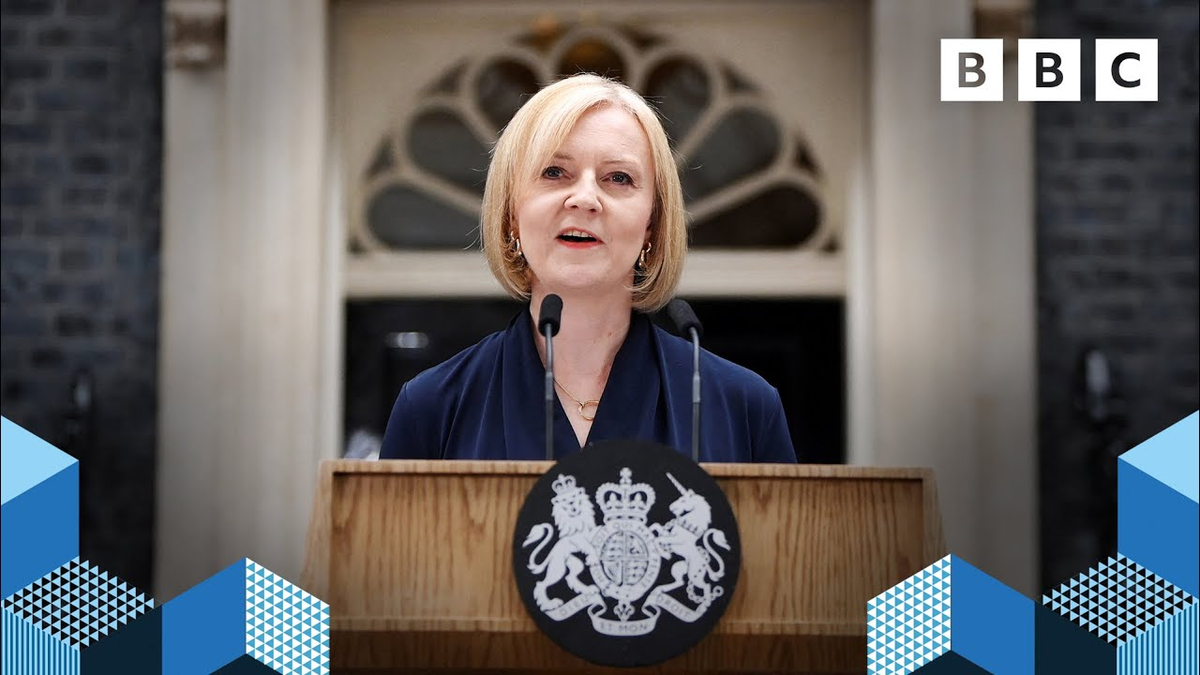
Liz Truss becomes the Prime Minister
Appointment of the Prime Minister
9 min read
Updated By: History Editorial Network (HEN)
Published:
On September 6, 2022, Liz Truss became the Prime Minister of the United Kingdom, succeeding Boris Johnson. Her premiership was marked by unprecedented economic challenges and political turmoil, making her tenure one of the shortest and most turbulent in British history.
Liz Truss, born on July 26, 1975, in Oxford, was educated at Merton College, Oxford, where she studied Philosophy, Politics, and Economics (PPE). Before entering politics, she worked as an economist and was involved in the energy and telecommunications sectors. Truss entered Parliament as the Conservative MP for South West Norfolk in 2010. Her rise within the Conservative Party was notable for her various ministerial roles, including Secretary of State for Environment, Food and Rural Affairs, Secretary of State for International Trade, and Foreign Secretary.
Truss’s path to the premiership began with the resignation of Boris Johnson in July 2022, following a series of scandals and a loss of confidence within his party. The Conservative Party leadership contest saw Truss competing against Rishi Sunak, the former Chancellor of the Exchequer. Truss’s campaign focused on tax cuts, deregulation, and a commitment to conservative economic principles, resonating with the party’s grassroots members. She was elected as the leader of the Conservative Party on September 5, 2022.
Upon becoming Prime Minister, Truss immediately faced a daunting array of challenges. The UK was grappling with a cost-of-living crisis, soaring energy prices, and inflation exacerbated by the global economic fallout from the COVID-19 pandemic and the war in Ukraine. Truss’s response to these crises was to implement a bold economic strategy centered on significant tax cuts and supply-side reforms aimed at stimulating growth.
On September 23, 2022, Chancellor Kwasi Kwarteng announced a mini-budget that included the largest tax cuts in the UK since 1972, totaling £45 billion, funded through increased borrowing. The mini-budget included measures such as scrapping the top rate of income tax, reversing a planned increase in corporation tax, and cutting National Insurance contributions. These measures were intended to boost investment and economic growth, but they were introduced without accompanying spending cuts or detailed plans to manage the increased borrowing.
The reaction to the mini-budget was immediate and severe. Financial markets reacted negatively, with the pound plummeting to historic lows against the dollar and bond yields spiking, leading to higher borrowing costs for the government. The turmoil in the financial markets prompted the Bank of England to intervene to stabilize the situation. The economic fallout from the mini-budget eroded confidence in Truss’s leadership and economic strategy, both within her party and among the general public.
As criticism mounted, Truss faced growing pressure to reverse the mini-budget’s measures. On October 14, 2022, she dismissed Chancellor Kwarteng and appointed Jeremy Hunt as his successor. Hunt quickly reversed almost all the tax cuts announced in the mini-budget in an effort to restore fiscal stability and confidence. Despite these reversals, the political damage was done.
Truss’s premiership was further undermined by a series of political missteps and resignations within her government. Her handling of the economy and loss of support from key figures within the Conservative Party made her position increasingly untenable. On October 20, 2022, after just 45 days in office, Truss announced her resignation, making her the shortest-serving Prime Minister in UK history. She remained in office until October 25, 2022, when Rishi Sunak succeeded her following a brief leadership contest.
Liz Truss’s brief tenure as Prime Minister is a stark reminder of the challenges and risks of implementing rapid and radical economic changes. Her rise and fall highlight the volatility of contemporary British politics and the profound impact of economic policy decisions on political stability. Truss’s time in office will be remembered for its dramatic economic upheaval and its significant, albeit short-lived, impact on the UK’s political landscape.
#MomentsOfLife #MoofLife_Moment #MoofLife #LizTruss #UKPolitics #EconomicPolicy #ConservativeParty #BritishPrimeMinister
Primary Reference
Prime Minister Liz Truss's statement: 6 September 2022 - GOV.UK
Explore the Life Moments of
 AI Twin